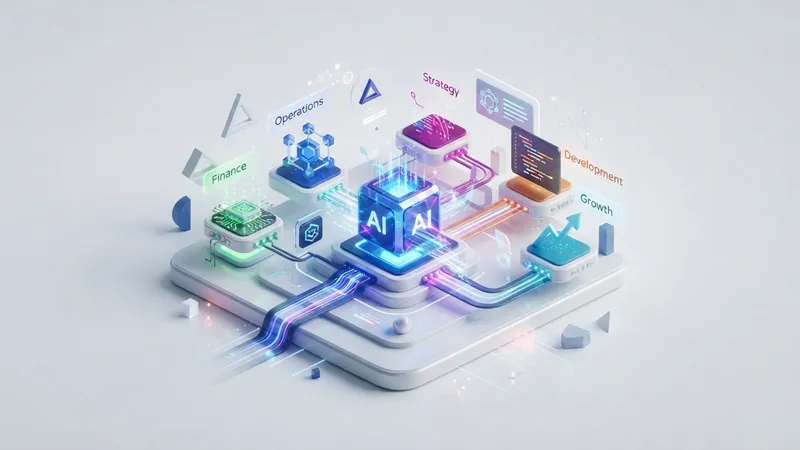
According to the Financial Times, a growing number of start-ups are relying on AI agents to handle daily operations, achieving a "zero-employee" model. These companies use large language models and #automation tools to manage customer service, marketing, finance, and other functions, with founders merely overseeing the AI systems.
For instance, one start-up uses agents built with AutoGPT and LangChain to handle customer inquiries and order management, significantly boosting efficiency. Another company uses AI agents to generate marketing content and automatically place ads, drastically cutting labor costs.
However, this model faces challenges. Experts note that the transparency of AI agent decisions and accountability issues remain unresolved, and complete reliance on AI may pose operational risks. Additionally, regulators are still uncertain about the legal status of companies with no employees.
Nevertheless, proponents argue that AI agents will reshape the entrepreneurial ecosystem, enabling small teams or even individuals to run global businesses at extremely low cost. In the future, as multi-agent collaboration technology matures, zero-employee companies may become the norm.
[AgentUpdate Depth Analysis] The rise of zero-employee start-ups marks a shift of AI agents from auxiliary tools to core operators. Unlike traditional RPA or single-task automation, agents based on large models possess autonomous decision-making and cross-system collaboration capabilities, thanks to frameworks like LangChain and AutoGPT. Horizontally, this model resembles AI software engineers like Devin but covers a broader scope, involving the entire business process. In the long run, this will drive the AI agent ecosystem toward greater autonomy and integration, but it also requires addressing key issues such as accountability, safety alignment, and regulatory compliance. For the AI Agent ecosystem, zero-employee companies serve as both a testing ground and a catalyst, accelerating the deployment of multi-agent collaboration and autonomous agent technologies, and potentially giving rise to entirely new forms of corporate organization.