In the 18th century, the chess-playing machine known as the 'Mechanical Turk' amazed Europe as an apparent automaton, while actually concealing a human chess master inside. Today, a similar illusion is playing out behind the global boom in generative AI and AI Agents. Behind the curtain of seemingly autonomous systems lies a vast, invisible workforce of human operators working in the shadows.
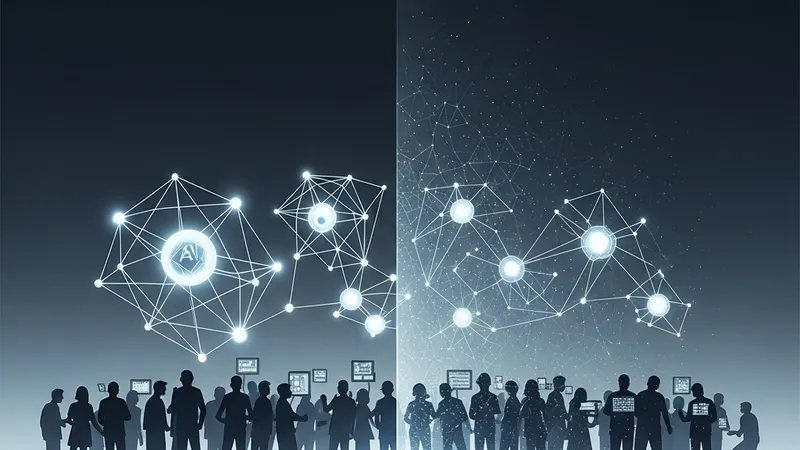
Tech giants and AI startups alike depend heavily on RLHF (Reinforcement Learning from Human Feedback) to refine their models. Millions of global contract workers—often labeled as 'data annotators' or 'AI trainers'—have become the modern-day 'Mechanical Turks'. They do not just label data; they act as a real-time '#human-in-the-loop' safeguard, stepping in to correct hallucinations and logical drift before the end-users notice.
The paradox of this automation is particularly acute for startups selling 'AI engineers' or 'AI support agents.' To maintain high reliability, many are forced to silently employ human developers to review and rewrite the AI's buggy outputs behind the scenes. This loop—where clients outsource to AI, which in turn silently outsources back to humans—reveals the critical robustness limitations of current large language models, driving up operational costs and challenging the narrative of zero-marginal-cost software.
[AgentUpdate Depth Analysis] The 'New Mechanical Turk' phenomenon highlights the fundamental robustness gap in current Transformer-based AI Agents when tackling multi-step, open-ended tasks. While platforms like Scale AI have commoditized static training data, the agentic ecosystem is transitioning toward 'Adaptive Human-in-the-Loop' (HITL) frameworks. Rather than treating humans as emergency safety nets, next-generation architectures must integrate human feedback as a core cognitive layer. This evolution underscores the importance of standardization efforts like the Model Context Protocol (#MCP), which facilitates seamless, secure interaction between humans, tools, and models. The future of AI Agents lies not in the complete elimination of human labor, but in redefining human-agent collaboration to deliver highly reliable, production-grade automation.