From Homer’s Odyssey to Agatha Christie’s crime fiction, humans have produced plenty of tales to grace the bookshelf. But research published in the journal Judgment and Decision Making suggests that generative AI may now be providing some serious competition.
In the study, 1,682 adults were asked to read one of six short stories, three of which were written by humans and three by ChatGPT. Each AI-generated story had a similar theme to one of the human-authored works. The team told participants whether their story was written by a human or AI, but this information was deliberately incorrect in some cases.
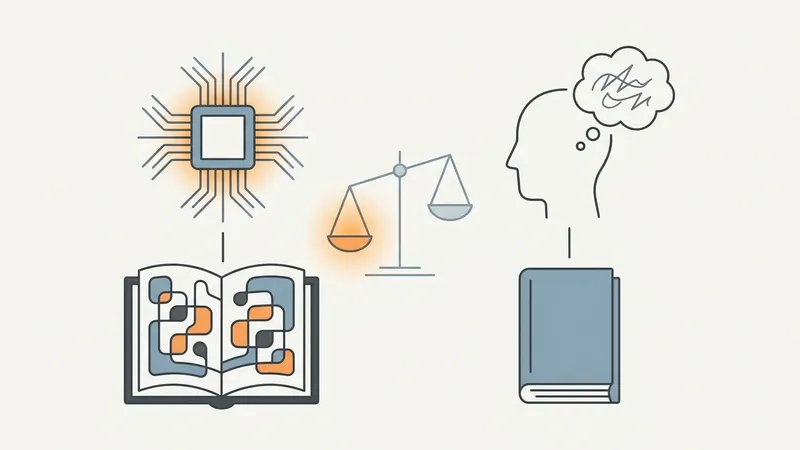
Participants who read an AI-generated story rated it as more absorbing and of higher quality than those who read a story written by a human. However, a psychological bias was clear: participants gave higher ratings to stories when they were told they had been written by people, showcasing a persistent preference for human creation.
Dr. Deena Skolnick Weisberg, a senior author of the research from Villanova University, said: "AI systems can already generate short stories that are seen as being at least as good as—if not better than—human-written stories. We should update our views of AI’s creative abilities accordingly." However, Weisberg, who is also a creative writer, noted that this does not mean the craft of writing should be abandoned to machines.
"We may need to make room for AI-generated novels, and for AI-human co-written novels, but that doesn’t mean that there’s no longer space for us to appreciate the process of human creativity," she said. She emphasized that humans write for self-expression, a value that remains unchanged regardless of AI's capabilities. Additionally, participants with positive attitudes towards AI gave higher ratings to stories labeled as generated by ChatGPT.
In two further experiments involving 905 adults, participants were given two stories of the same theme (one human-written, one AI-generated) and asked to guess the author. In one experiment, only 40% guessed correctly—worse than random chance—while in the other, 52% guessed correctly. The authors concluded there is no general evidence that average readers can distinguish human-written from AI-generated prose.
Interestingly, self-reported expertise with fiction was not linked to guessing accuracy, but familiarity with AI systems was. "AI writing has a particular style that we can learn to recognise with practice—just as we can learn to recognise different human authors’ unique styles," Weisberg noted.
[AgentUpdate Depth Analysis] This study underscores a significant shift in creative computing, carrying profound implications for the AI Agent ecosystem. Currently, frameworks like CrewAI and LangChain are moving from simple zero-shot generation to complex, agentic workflows involving drafting, peer-reviewing, and editing agents. If single-prompt #LLM outputs can already match or outperform human creative writers in blind tests, the optimization of multi-agent collaboration will inevitably push automated storytelling to unprecedented levels of sophistication and narrative depth. Looking forward, AI Agents will transition from mere drafting utilities to proactive, individualized content engines capable of tailoring long-form novels to specific user preferences in real-time. For developers and creators, the barrier to entry for rich content creation will drop dramatically, redefining the Human-in-the-Loop paradigm where the human's primary value shifts from writing text to orchestrating agentic workflows and curating emotional nuance.