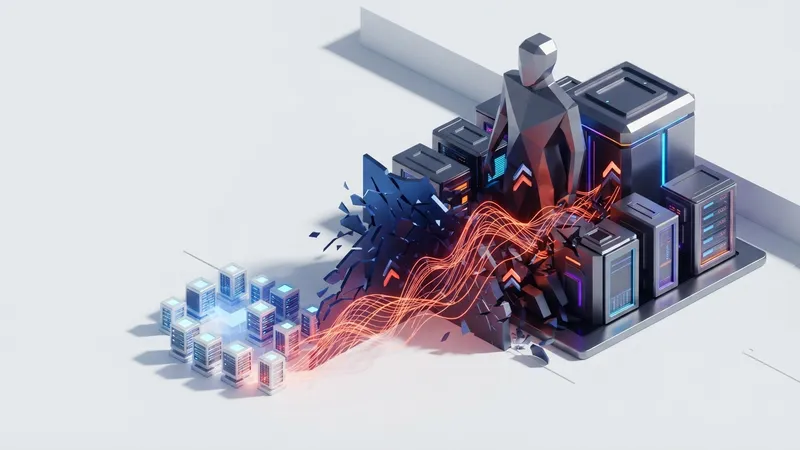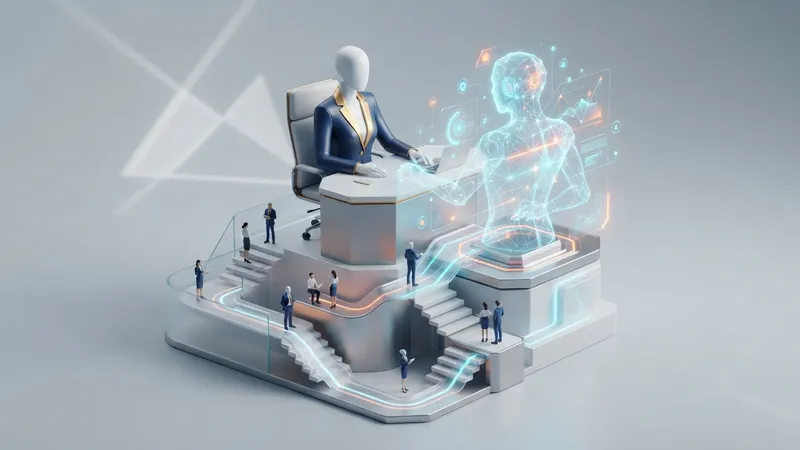
For years, AI's impact on employment was largely confined to entry-level roles. But a new trend is emerging: middle managers are now squarely in the crosshairs of #automation. A growing number of companies are deploying AI agents to take over scheduling, performance tracking, and report generation—directly shrinking management headcount.
According to FT, several large enterprises have begun piloting AI tools to replace some management positions. These tools can monitor team output in real time, auto-generate weekly reports, and even coordinate cross-departmental task allocation. Work that previously required multiple middle managers can now be handled by a single agent. The logic from executives is straightforward: management roles are full of repetitive, data-driven tasks—exactly what AI excels at.
Behind this trend is the rapid maturation of AI Agent technology. Unlike early automation scripts, the new generation of agents possesses contextual understanding, multi-step planning, and tool-calling capabilities—allowing them to "think" and "execute" like human managers. For instance, an agent can read data from project management systems, identify bottlenecks, automatically send reminders to relevant employees, and summarize risk points for superiors—all without human intervention.
However, replacing managers is not without friction. Management work involves extensive interpersonal communication, emotional support, and complex decision-making—areas where AI still falls short. Most companies are currently adopting a "human-AI collaboration" model: AI handles data and processes, while human managers focus on strategy and team building. Even so, headcount reduction in management ranks appears inevitable. Some analysts predict that middle management roles will shrink by more than 20% over the next three to five years.
For tech professionals, this shift means rethinking career paths. The classic route of "spend a few years in tech, then move into management" may no longer be safe. Instead, hybrid talents who can wield AI tools and design agent workflows will be in high demand.
[AgentUpdate Depth Analysis] AI replacing managers is not simply a "machines replace humans" narrative—it's a fundamental restructuring of organizational architecture. When agents can handle information aggregation, progress tracking, and resource scheduling, the rationale for traditional pyramid-style middle management is undermined. Comparatively, multi-agent frameworks like LangChain and CrewAI are moving "AI managers" from concept to reality, while protocols like MCP are lowering the barrier for agents to plug into #enterprise systems. In the long run, the AI Agent ecosystem will spawn a new organizational form: humans focus on creativity, strategy, and relationships, while agents handle execution, coordination, and optimization. For AI Agent entrepreneurs, management is the next battleground—whoever cracks the "agents managing people" loop first will gain an edge in the trillion-dollar enterprise services market. But beware: the trust crisis and ethical debates triggered by management replacement may prove harder to solve than the technology itself.