How do AI workflows transition from experimental lab marvels to reliable production pipelines? At the 2026 ChinaJoy AI Future Ecology Conference, pioneers from Alibaba Cloud, Funloom AI, VAST, and Pele Interactive gathered to discuss the scaling of generative AI. The real challenge is no longer content generation, but building stable, engineered workflows and collaborative ecosystems. Success now depends on deep domain understanding and operational efficiency.
Wu Tong, CEO of Funloom AI, shared how they upgraded their platform into a unified framework of text, RPG, and interactive games. Exploring the Vibe Coding pathway, Funloom aims to lower creation barriers while maintaining quality. In this AI-native gaming model, the player and creator co-build the "flow" state. Creators first refine their ideas in text-based games, forming a fine-tuning layer for the model, which can then be converted into a rich interactive game with one click, reshaping development pipelines.
Ai Wen, VP of Alibaba Cloud's AI Native Division, highlighted how AI is transforming cloud services into MaaS (Model-as-a-Service) and Tokens-based services. Alibaba Cloud integrates its Qwen models into the gaming chain to offer powerful cloud elasticity. He outlined four core stages of AI NPC evolution, culminating in autonomous agents that understand virtual worlds and dynamically plan actions based on environment inputs.
Additionally, Luo Xiaowo, Strategy Lead at VAST, discussed the rapid adoption of AI 3D and World Models in the gaming sector. 3D generative AI is progressively merging with production lines, vastly accelerating asset creation and paving the way for high-fidelity virtual realities.
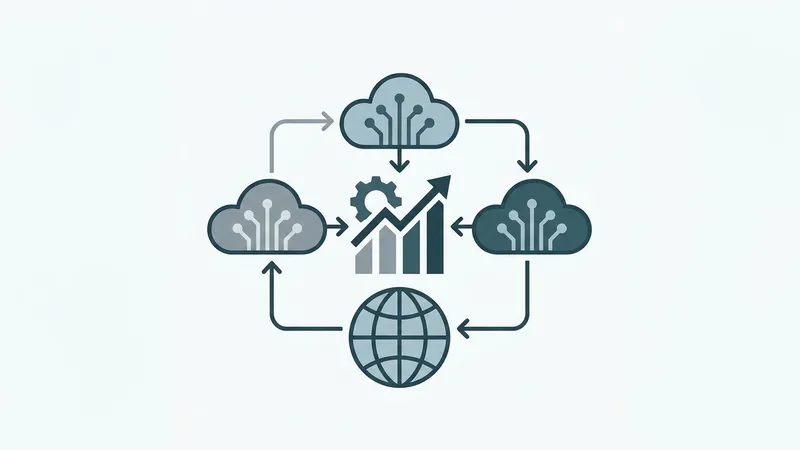
[AgentUpdate Depth Analysis] This discussion highlights a pivotal shift: the AI frontier is moving from single-model capabilities to complex system orchestration. In contrast to standard orchestration tools like LangChain or CrewAI, massive production pipelines in entertainment require ultra-low latency, reliable state-tracking, and precise predictability. The rise of standards like the Model Context Protocol (#MCP) will facilitate seamless interoperability among heterogeneous models and agentic tools. This evolution shifts the AI Agent paradigm from isolated chatbots to collaborative "agentic clusters" capable of real-time planning, execution, and self-correction. For the global tech ecosystem, mastering this industrial-grade #workflow engineering will be the defining factor in unlocking the multi-billion-dollar potential of next-generation interactive computing.