On July 21, Alibaba Qoder officially launched Qoder Security, a cutting-edge active security capability. Unlike traditional scanning tools that rely on passive rule-matching for known patterns, #Qoder Security performs security checks in real-time as the AI generates code. Once an issue is detected, the system initiates auto-remediation and verifies the fix in the subsequent scan. This complete closed-loop of "detection, remediation, and re-verification" functions like an on-demand, dedicated security engineer, designed to satisfy rigorous enterprise-grade security needs.
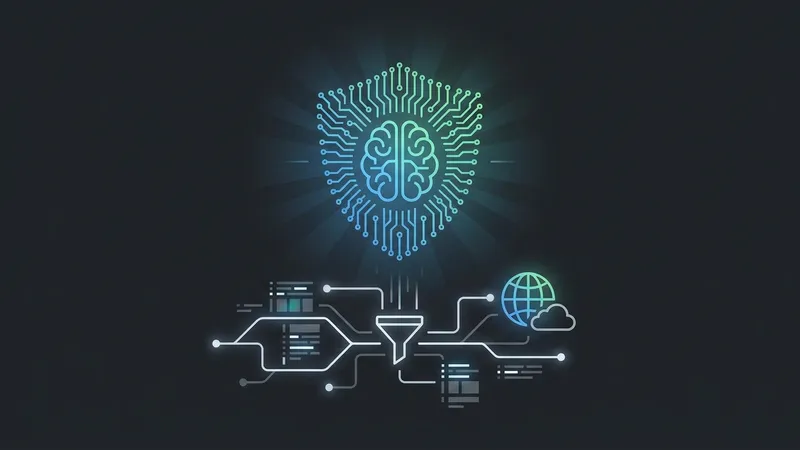
Statistics indicate that over 40% of new code globally is now AI-assisted. However, AI-generated code is often more prone to vulnerabilities than human-written code, while enterprise security review processes have lagged behind. Security can no longer rely purely on developer discipline or standard model behaviors; it must be built directly into the Agent framework. Qoder upgrades traditional "static scanning" into an "active security" solution, integrating a security LLM that understands code contexts and taint propagation paths to ensure only real, reachable risks are reported.
To balance cost, latency, and detection rates, Qoder introduced a three-layer security architecture. The first layer performs character-flow level screening during code generation to catch high-risk functions with zero latency and zero extra computing costs. The second layer scans for semantic-level risks like SQL injection and remote code execution once a task session completes. Before committing code, the third layer triggers a comprehensive taint analysis that tracks full data flows across multiple files and functions, catching deep-seated vulnerabilities that single-file reviews miss.
Testing data shows that, compared to conventional approaches, Qoder Security achieves a 60% increase in detection, an 80% reduction in false positives, and cuts vulnerability resolution down to an hourly scale. The Qoder team has already used Qoder Security to analyze major open-source and AI infrastructure projects, identifying over 600 security issues. The active security feature is now available for one-click activation in both global and Chinese versions of Qoder Desktop and Qoder CLI.
[AgentUpdate Depth Analysis] The launch of Qoder Security marks a pivotal shift for Coding Agents from pure generation to trusted, closed-loop execution. While traditional #DevSecOps tools like Snyk rely on static patterns, Qoder's self-healing loop—incorporating context-aware detection, auto-remediation, and verification—transforms the AI agent into an autonomous collaborator rather than a mere copilot. As AI-generated code approaches dominance, integrating "Security by Design" within Agent frameworks is no longer optional. This shift paves the way for an AI-Native SDLC (Software Development Life Cycle), where future agents possess intrinsic immune systems to self-heal code before deployment, significantly lowering the trust barrier for enterprise AI adoption.