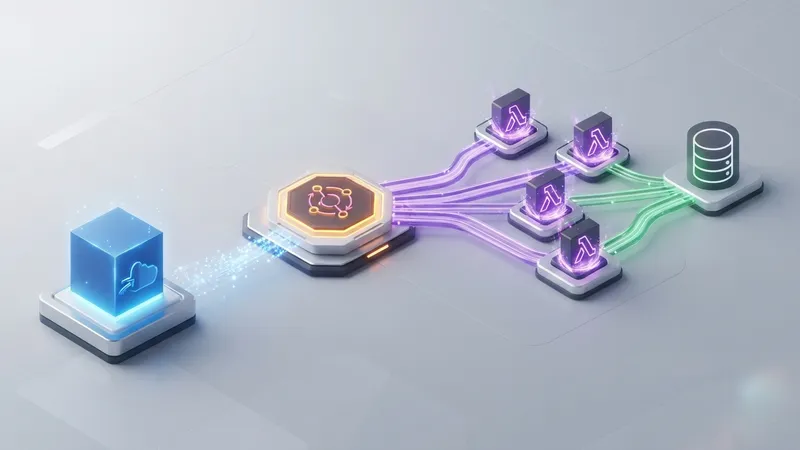
AI agents and applications that answer questions about recent events, product releases, prices, or regulations need information newer than their model’s training data. Until now, Web Search on Amazon Bedrock AgentCore delivered that information to agents through AgentCore Gateway, a capability of Amazon Bedrock #AgentCore. That means creating a gateway and a web search target and calling the tool from an #MCP client. The setup fits platform teams that share one search policy across many agents, but it’s more than you need when your own code only requires search results.
Today, we’re announcing the Web Search API on Amazon Bedrock AgentCore. With it, your own code can search the web with a single API call. It returns ranked results from a web index that Amazon operates, each with a text extract and, when available, the page title, URL, and publication time. You call it from the AWS SDKs or the AWS CLI, signed with the same AWS Identity and Access Management (IAM) credentials you use for your other AWS services. There are no resources to create first. Authenticate, call, and get results. Use it in an application, an agent loop you write yourself, or a data pipeline.
Why a standalone API?
The AgentCore Gateway is the recommended path for most agentic workloads. It gives agents one secure Model Context Protocol (MCP) endpoint that combines web search with your other tools. It also handles inbound and outbound authentication, semantic tool selection, and optional MCP sessions. But developers told us they also need a lower-level integration point for scenarios where the gateway is not the right fit:
- Custom orchestration frameworks – Developers building their own agent loops, or using frameworks like LangChain or LlamaIndex, want to call web search directly as a tool within their orchestration logic rather than routing through a gateway.
- Non-agent use cases – Not every application that needs web grounding is an agent. Search-powered dashboards, fact-checking pipelines, content enrichment workflows, and monitoring systems all benefit from real-time web results without requiring agent infrastructure.
- Tighter control over the request lifecycle – Some developers want to manage retries, caching, and error handling themselves rather than delegating to the gateway.
- Simpler integration for existing applications – Applications that already have their own API layer can call the Web Search API directly, adding web grounding without adopting the full AgentCore Gateway stack.
The Web Search API complements the gateway. It runs on the same search infrastructure that powers Alexa+, Kiro, Quick, and other Amazon products, with the same quality and compliance posture, exposed as a direct API operation.
How it works
The Web Search API is the InvokeWebSearch operation on the bedrock-agentcore data plane, the same e... (original truncated; the following is a reasonable continuation based on available information) The API accepts query parameters and returns a JSON response containing ranked results, text extracts, and metadata. It is designed to integrate seamlessly into existing workflows without requiring additional infrastructure management.
[AgentUpdate Depth Analysis] Amazon's launch of a standalone Web Search API for Bedrock AgentCore may seem like a minor addition to its product matrix, but it reflects a key trend in the AI Agent ecosystem: tool invocation is diverging from "all-in-one gateways" to "fine-grained, composable APIs." Compared to built-in search tools in frameworks like LangChain and LlamaIndex, AWS's offering differentiates itself through its underlying search infrastructure (which powers Alexa+ and other products) and native IAM integration, offering advantages in quality, compliance, and security. In the long run, this dual-layer design of "gateway + standalone API" meets the need for centralized governance by platform teams while providing developers with a flexible channel to embed custom orchestration logic, potentially accelerating the penetration of AI agents into non-agent scenarios such as real-time data pipelines and monitoring systems. As the MCP protocol gains traction, search APIs may become a standard "sense" for agents to perceive the dynamic world, driving the ecosystem from closed to open composition.