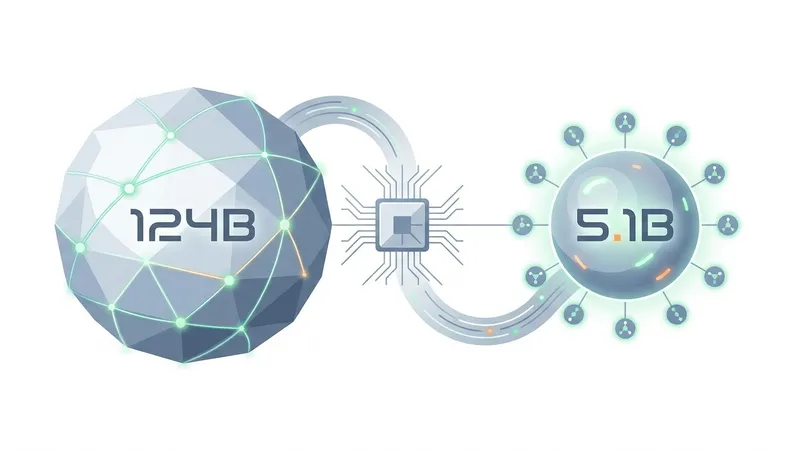
On July 24, Ant Bailing officially launched its next-generation native hybrid reasoning model, Ling-3.0-Flash. Featuring a total parameter count of 124B and an active parameter count of just 5.1B per token, the model delivers exceptional efficiency. While significantly reducing computational overhead, Ling-3.0-Flash matches or outperforms industry-leading models 2 to 3 times its active size in core benchmarks like base reasoning, instruction following, and long-context processing. The model is currently available on OpenRouter for a one-week free trial, after which it will be officially open-sourced.
A major highlight of this release is its deep optimization for AI Agent workflows. The model expanded its training to over 10,000 real-world interactive environments and enhanced self-correction and long-term planning mechanisms. Whether in code generation, complex task decomposition, or multi-source research, Ling-3.0-Flash demonstrates robust closed-loop execution, resolving the common issue of conventional models losing track or failing mid-way through long-duration tasks.
The key to achieving such "compact intelligence" lies in its completely redesigned core architecture. Shunning sheer parameter scaling, Ling-3.0-Flash implements a hybrid attention architecture from the pre-training phase. It stacks #KDA linear attention layers and MLA (Multi-head Latent Attention) layers in a 5:1 ratio, striking an optimal balance between long-context efficiency and overall model capability.
Additionally, Ling-3.0-Flash upgrades its predecessor's Lightning Attention to KDA (Kimi Delta Attention). By introducing fine-grained diagonal gating within the Delta Rule state updates, the model precisely recalls critical information when parsing ultra-long documents and codebases. Furthermore, the expert activation ratio per token has been halved from 1/32 to 1/64, unlocking massive efficiency gains.
To ensure AI Agents run faster and more reliably, Ant Bailing has reinforced the model with an advanced engineering framework. By implementing cluster-level hierarchical caching, the system avoids redundant computations in multi-turn dialogues, slashing time-to-first-token (TTFT) latency by 60% to 80% under long context scenarios. Moreover, the updated multi-agent collaborative framework allows specialized agents to cross-validate tasks, drastically reducing single-model hallucination risks in high-frequency production environments.
[AgentUpdate Depth Analysis] The launch of Ling-3.0-Flash signifies a pivotal shift in LLM design toward "computational efficiency" tailored for the AI Agent era. Standard Transformer architectures often struggle with escalating KV Cache costs and processing latency during complex, multi-turn Agent tasks. By blending KDA linear attention with MLA alongside a highly sparse 1/64 #MoE activation, Ling-3.0-Flash breaks the cost bottleneck for large-scale Agent deployments. Its pre-training on 10,000+ interactive environments and cluster-level caching tackle the dual pain points of high TTFT and task-disruption in long-context execution. This co-design of architecture and system engineering establishes a new benchmark for cost-effective enterprise AI Agents, accelerating the transition from basic chat assistants to fully autonomous, production-grade digital workers.