Anthropic declined to comment on its potential valuation. The startup, led by CEO Dario Amodei, filed paperwork with the SEC in June, entering a quiet period that restricts public commentary on its financials.
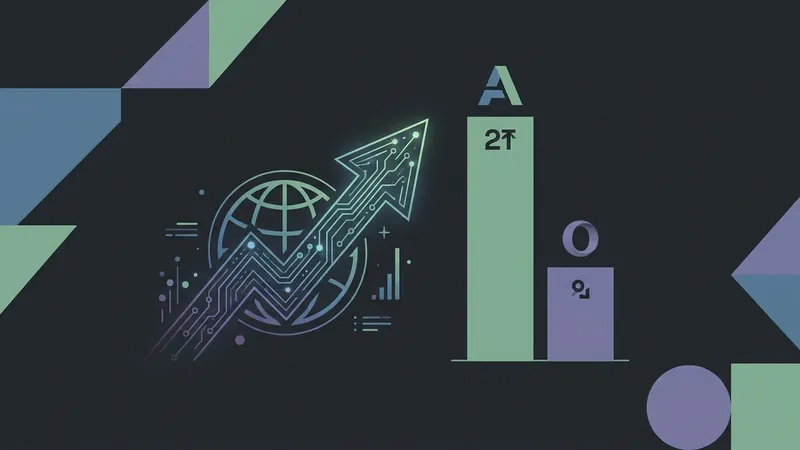
Anthropic has gained ground on rivals OpenAI and Google this year, releasing models that outperformed competitors while capturing corporate clients. In May, the group announced its annualized revenue surpassed $47 billion. Venture capitalists and sovereign wealth funds have poured nearly $100 billion into the company in 2026. #Anthropic’s valuation leapfrogged OpenAI’s for the first time in May, reaching $965 billion after new investments.
However, the company faces substantial hurdles. It has repeatedly clashed with the administration and is in active litigation with the US Department of Defense, which labeled Anthropic a supply-chain risk. Furthermore, June export controls from the Commerce Department forced Anthropic to briefly pull its flagship Fable 5 and Mythos 5 models, spooking some dependent enterprise clients.
Customers are also becoming highly sensitive to model pricing. Faced with spiraling costs, some have reversed internal directives to maximize AI usage, opting for cheaper, less capable models. According to Artificial Analysis, Anthropic’s top model costs over 2.5 times more than OpenAI’s flagship, while Chinese open-weight alternatives cost a fraction of the price. Data from payments firm Ramp indicates that while Anthropic grew its US market share last month, businesses are hitting their spend limits and seeking budget options.
"It’s easy to focus on the challenges," said an investor backing Anthropic, OpenAI, and SpaceX (which #IPO'd at a $1.77 trillion valuation in June). "But the company remains in the pole position for performance and market positioning."
[AgentUpdate Depth Analysis] Anthropic’s massive $2 trillion valuation projection highlights the sheer scale of the AI boom, yet its pricing friction and regulatory hurdles signal a critical shift in the AI Agent ecosystem. The massive deployment of autonomous agents requires highly reliable, cost-effective, and low-latency infrastructure. Anthropic’s premium-pricing model is being challenged by cheaper open-weight alternatives and OpenAI's aggressive pricing cuts, forcing developers to adopt hybrid routing architectures. The future of the Agent ecosystem lies not just in raw frontier model intelligence, but in end-to-end workflow optimization and orchestration. To sustain its dominance, Anthropic must leverage open-ecosystem tools like the Model Context Protocol (#MCP) to lower developer friction, balancing its high technical premium with economic viability to remain the core engine of next-generation multi-agent systems.