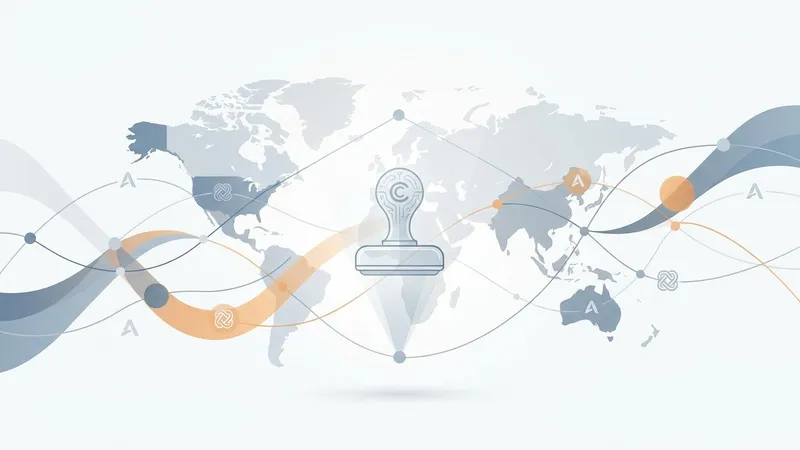
Anthropic has revealed that it will soon watermark content processed—not just generated—by any of its models. In a support article, the company explained that it is rolling out machine-readable watermarks to comply with the European Union’s AI Act, which mandates that providers watermark AI-generated or manipulated audio, image, text, and video outputs. The law applies to any AI model released after August 2, with a grace period extending until December 2026 for older models.
Anthropic confirmed that moving forward, all new models offered globally will carry watermarks "from day one." Text outputs will contain embedded watermarks invisible to the user, while other generated files will include digitally signed C2PA provenance metadata where supported.
Notably, #Anthropic is deploying an aggressive approach, applying watermarks to all processed content even though the EU does not require it for cases where AI performs basic assistive functions like standard grammar editing or where it does not "substantially alter" the user's original text.
Because a watermark applied at the model level cannot distinguish between wholesale generation and a simple comma fix, Claude may end up stamping human-written content that regulators intended to leave alone. The efficacy of these watermarks will remain unclear until Anthropic releases a detection tool. The company plans to eventually share details about how to detect these marks to fulfill technical support obligations under EU law.
[AgentUpdate Depth Analysis] Anthropic's aggressive global #watermarking strategy signals a major shift in AI compliance, but it introduces massive complications for the AI Agent ecosystem. By watermarking all processed text, #Claude blurs the line between pure AI generation and simple human-AI collaboration. For enterprise agents deployed for workflow automation and co-authoring, this "blanket" approach could flag edited human assets as entirely AI-generated, potentially driving enterprise users away to local open-source models like Llama 3 that do not enforce such strict compliance. This highlights a critical challenge for the future of Agent infrastructure: building a granular provenance system that can differentiate "assistive collaboration" from "automated generation."