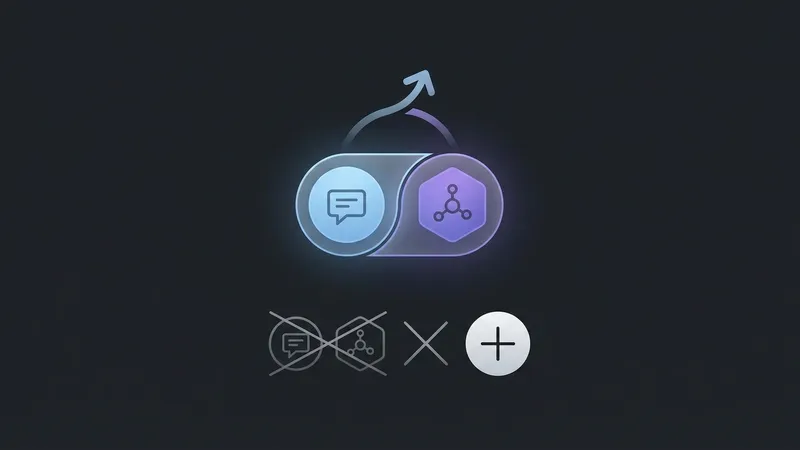
Anthropic is merging its front end for Claude chat and Cowork, making it less confusing for users to decide which workspace to use for different tasks.
The unified interface lets users access chat, #Cowork, and Artifacts (#Claude’s interactive workspace feature) within one window. Claude Design, which was introduced in April for website and prototype design, also works anywhere within the Claude environment.
Before this rollout, the company said customers often struggled to choose the right tab for the right task. With the new design, Claude automatically routes requests without having to switch tabs or windows, removing confusion and unifying the user experience.
Anthropic is also adding dedicated features for making presentations and documents. Users can ask the AI assistant to create, edit, and present slides, and it can also download the generated presentation as a PDF or PowerPoint.
Similarly, with the Docs feature, users can work alongside Claude to create sections, ask questions, and comment on completed parts. Users can share generated documents or slides with a link and edit them on their mobile devices, allowing seamless cross-device synchronization.
These features are rolling out to Claude’s Pro and Max plans first, on the web, desktop, and mobile over the coming weeks, followed by free and team tiers later. This update comes in the wake of an upgrade of Cowork’s memory layer, which helps Claude remember user context across chats.
[AgentUpdate Depth Analysis] #Anthropic’s consolidation of Claude Chat and Cowork represents a significant leap forward in AI Agent interaction design. Moving away from the limiting 'single-textbox' chat interface, this unified, multi-modal workspace treats AI as a spatial co-worker rather than a passive responder. By integrating Artifacts, memory layers, and design tools under an intelligent 'automatic routing' mechanism, Anthropic is pioneering a fluid canvas environment. Compared to competitors like OpenAI, this approach emphasizes seamless context-preservation and zero-friction multitasking. This update signals a future where AI Agents dynamically orchestrate UI components and collaboration tools on the fly, transforming static chatbots into highly adaptive, proactive operating systems for knowledge work.