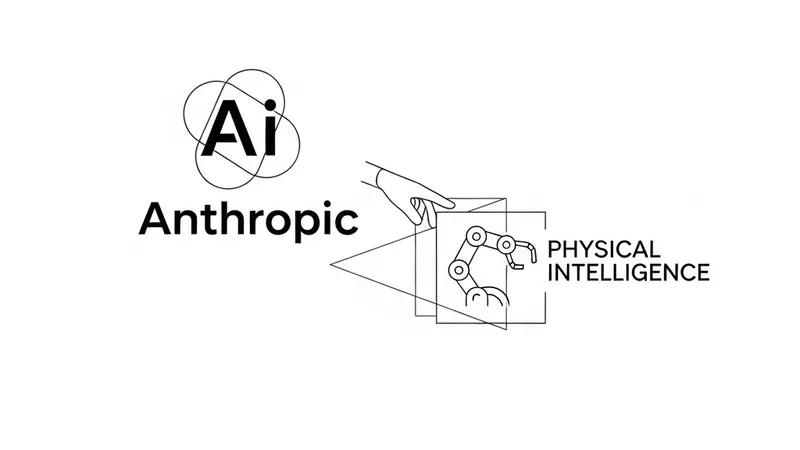
This year has witnessed an unprecedented M&A frenzy in the AI sector. Giants like Anthropic and OpenAI are aggressively snapping up developer tools and testing startups to bridge the gap between model capabilities and enterprise revenue. However, the recent rumor regarding Anthropic acquiring the #robotics startup Physical Intelligence has sent shockwaves across social media.
Physical Intelligence is no mere hobbyist shop; co-founded by Silicon Valley veteran Lachy Groom, it has raised over $1 billion, with its π0.5 model serving as a benchmark in robotics research. While CEO Karol Hausman downplayed the reports, The Information suggests that serious acquisition talks occurred earlier this spring, lending credence to the speculation despite the denials.
With OpenAI having acquired at least 17 companies since 2023 and both firms preparing for potential IPO debuts, the race for physical-world data is heating up. Both companies recognize that text-based training data is insufficient for true superintelligence. By integrating physical-world understanding, these labs hope to transition from chatbots to versatile AI Agents capable of interacting with the real world.
[AgentUpdate Depth Analysis] This acquisition narrative underscores a critical structural shift in the AI Agent ecosystem: the convergence of Large Foundation Models (LFMs) and robotics, known as Embodied Intelligence. Unlike pure software agents, these next-generation systems require deep grounding in physical dynamics. By potentially integrating Physical Intelligence, Anthropic could leapfrog the arduous process of building hardware infrastructure from scratch, a path OpenAI is pursuing through its own dedicated robotics labs. This strategy reflects a broader trend where the value of an AI Agent is increasingly measured by its efficacy in the physical domain. As these models move beyond digital interfaces into robotic actuators, the ability to generalize across hardware architectures will become the ultimate competitive moat. This move highlights a future where AI Agents aren't just processing tokens but orchestrating physical infrastructure, fundamentally altering the ROI model for both venture investors and tech incumbents in the robotics space.