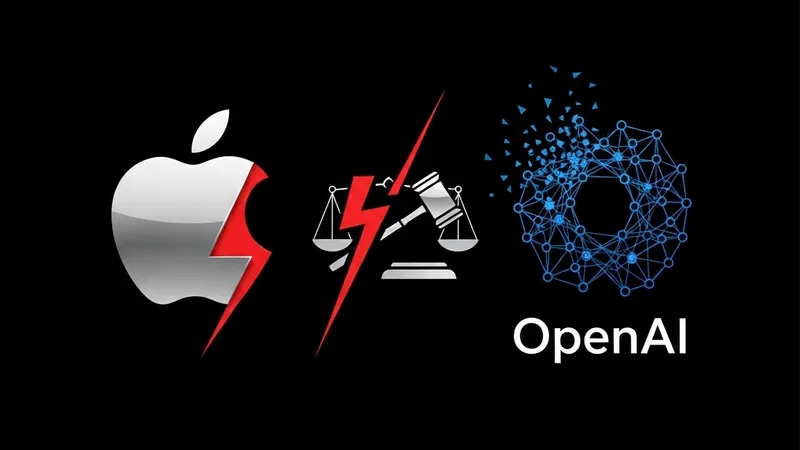
Tech giant Apple Inc. has reportedly filed a lawsuit against leading artificial intelligence research firm OpenAI, accusing it of “systematic theft of trade secrets.” This significant development has sent ripples across the global tech industry, signaling an escalating battle over data ownership and intellectual property protection within the artificial intelligence (AI) sector.
Preliminary information suggests that Apple's core claim centers on OpenAI's alleged unauthorized acquisition and use of Apple's proprietary data and technologies during the development and training of its large language models (#LLMs) and other generative AI products. These trade secrets could potentially include, but are not limited to, data from internal Apple projects, unreleased product information, or specific datasets from its developer ecosystem.
This case underscores the critical importance of data provenance and transparency amidst the rapid advancements in AI technology. As AI models become increasingly powerful, the demand for vast amounts of high-quality data has surged. However, issues surrounding data acquisition methods, ownership, and usage rights have remained contentious. If Apple's allegations prove true, it will have profound implications for the entire AI industry concerning data ethics, compliance, and the demarcation between open-source AI and proprietary technologies.
The lawsuit is expected to pose significant challenges to OpenAI's reputation and operations, while also compelling all AI developers and enterprises to exercise greater diligence in data collection and utilization. Moving forward, the traceability, auditing, and intellectual property protection of AI model training data will become even more crucial, potentially leading to stricter industry standards and regulatory frameworks.
[AgentUpdate Depth Analysis]
Apple's lawsuit against OpenAI sends a strong signal through the burgeoning AI Agent ecosystem. Modern AI agents, whether built on frameworks like LangChain, CrewAI, or AutoGPT, inherently rely on underlying Large Language Models (LLMs). If the foundational data used to train these LLMs is compromised by trade secret disputes, the legitimacy and commercial viability of the agents built upon them could be jeopardized. This case highlights the imperative for agent developers to not only focus on model performance but also on the integrity and legal standing of their data sources. We are likely to see an increased demand for compliance audits of the base models and data used for agent training. Providers capable of demonstrating that their models were trained on fully compliant, undisputed data will gain a significant market advantage. Furthermore, this could accelerate the adoption of privacy-preserving AI techniques, such as federated learning or differential privacy, within agent development to mitigate legal risks by training models without direct data exposure. The entire AI Agent supply chain, from data sourcing to model deployment, will face unprecedented pressure for compliance and transparency, ultimately fostering a more mature and robust industry.