On July 2, the open-source reinforcement learning infrastructure project AReaL officially launched its 2.0 version. Designed as an engineering bridge connecting foundation model training with modern agent applications, #AReaL provides highly efficient and secure reinforcement learning (RL) training support for production-level Agent scenarios.
While AI Agents are widely deployed in production environments today—handling complex tasks like coding and tool calls—they often fail to "grow" from their daily work. High-value data such as execution logs, tool success/failure rates, and user feedback are typically wasted as dead logs. The primary challenge is converting these interaction trajectories into model improvements safely and consistently.
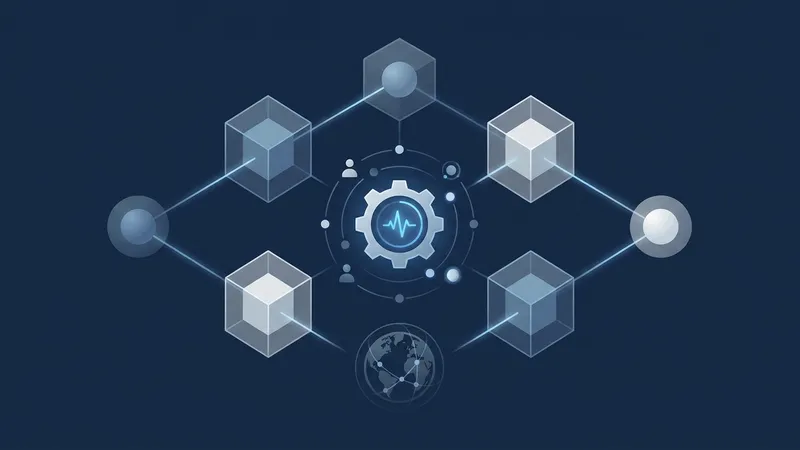
AReaL 2.0 solves this post-deployment learning dilemma. Developers do not need to rebuild their Agent architectures. By routing model inference requests through AReaL 2.0's unified gateway, they can immediately run an Online RL pipeline. For instance, using Hermes Agent as a reference, AReaL 2.0 logs critical interaction trajectories in the background and trains the underlying model using real-world reward signals.
To address enterprise privacy and security demands, AReaL 2.0 introduces an innovative Data Proxy mechanism for agent trajectories. This feature enables data masking, permission isolation, and compliance auditing, allowing real task data to flow into the RL training cycle without compromising enterprise security boundaries.
Co-founded in 2024 by Ant Group, Tsinghua University, and HKUST, the AReaL project became an independent open-source community in May 2026 and joined the PyTorch Foundation Ecosystem. Supported by industry partners including Huawei Cloud and MindLab, the project has open-sourced its code on GitHub and published its technical report on arXiv.
[AgentUpdate Depth Analysis] Traditional RLHF relies heavily on offline, static datasets, creating a bottleneck for dynamic agent environments. AReaL 2.0 breaks this paradigm by introducing production-grade Online RL infrastructure. Compared to orchestration-focused frameworks like LangChain or CrewAI, AReaL 2.0 targets the underlying learning loop, converting real-time execution trajectories into training data safely. By establishing a robust data proxy mechanism, it alleviates enterprise privacy concerns—the biggest blocker for continuous training in production. This shift from "static tool use" to "continuous self-evolution" will redefine agent competitiveness. In the future, the value of an AI Agent will not be determined solely by its base model, but by its "evolution rate" powered by feedback-driven reinforcement learning loops.