Amazon Web Services has officially announced the general availability of Automatic Policy Refinement for Automated Reasoning checks in Amazon Bedrock Guardrails. Previously, refining an Automated Reasoning policy was a tedious manual cycle of diagnose, hand-edit, retest, and repeat. The new refinement engine automates this bottleneck by diagnosing failing test cases and proposing formal-logic fixes, requiring only user approval before applying changes.
Automated Reasoning checks in Bedrock #Guardrails utilize formal verification to mathematically prove answer correctness. In translating natural language instructions to formal logic, this system delivers up to 99% verification accuracy in unambiguous scenarios. However, customers frequently reported that iterative tuning of these complex logical constraints created the most significant friction point during their initial policy development.
To streamline this process, AWS introduced two new refinement modes: Iterative Refinement for rule-level logic issues, and Ambiguous Variable Refinement for translation and language issues. Both modes support a repeatable workflow via Bedrock APIs (start, poll, and retrieve) as well as a straightforward console experience to turn failing policies into passing ones.
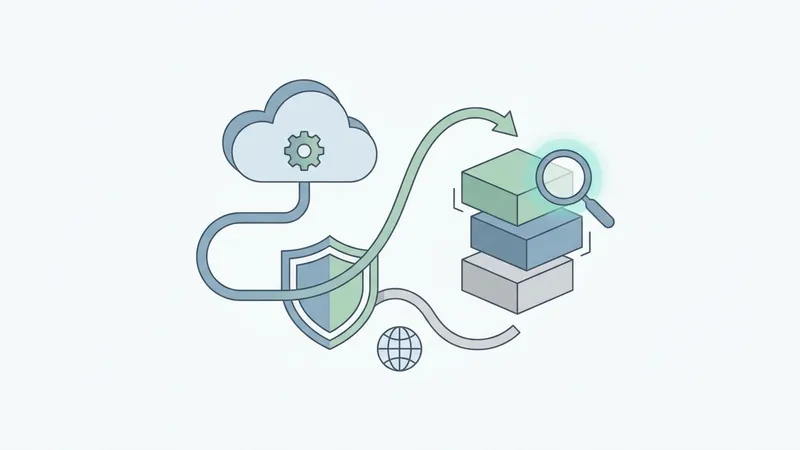
Under the hood, Automated Reasoning checks rely on a two-step validation pipeline. First, the "translate" step maps natural-language inputs to variable assignments based on descriptions. Second, the "validate" step applies formal logic rules to those assignments to output findings like VALID, INVALID, or SATISFIABLE. Refinement targets the root cause of failures in either step of this pipeline.
[AgentUpdate Depth Analysis] Amazon Bedrock's automatic policy refinement addresses a key barrier to enterprise AI safety: the high learning curve of formal methods. While probabilistic guardrails (like Llama Guard or NeMo Guardrails) are prone to hallucinations and rule bypasses, Bedrock's formal verification offers mathematical guarantees, though historically hampered by manual engineering complexity. By automating the debug-and-fix cycle of formal rules, AWS lowers the bar for rigorous policy enforcement. For the AI Agent ecosystem, this is a major evolutionary step. As autonomous Agents execute complex tasks in sensitive domains like finance or compliance, deterministic guardrails are critical. This feature paves the way for "verified-by-design" Agent systems, ensuring they operate strictly within pre-defined safe parameters without imposing high operational overhead on developers.