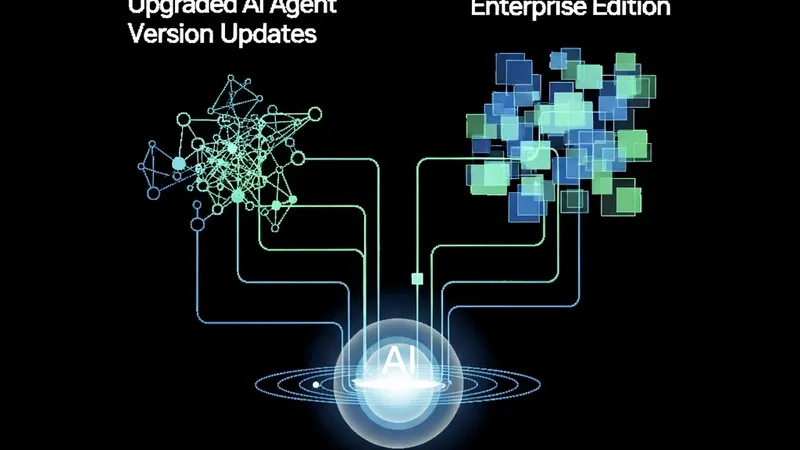
In 2026, AI Agents have witnessed an explosive boom. More and more tech professionals are delegating entire workflows to AI, leaving humans to only review the output. However, "how much work do you actually dare to hand over completely?" has become the ultimate benchmark for measuring an Agent's upper limit. At the recent Baidu AI DAY in Chengdu, the tech giant announced a major upgrade to Baidu Dazi, unveiling the Personal Version, Enterprise Version, and the Dazi Alliance to directly address this "trust radius" challenge.
Shen Dou, Executive Vice President of #Baidu and President of Baidu Smart Cloud, stated that up to 90% of future work will be deeply assisted by AI Agents. Since its launch, Baidu Dazi has surpassed Anthropic and OpenAI on the PinchBench agent benchmark. Its daily query volume has skyrocketed 20x, making it the fastest-growing general agent product. The core of this upgrade lies in expanding the user's "trust radius."
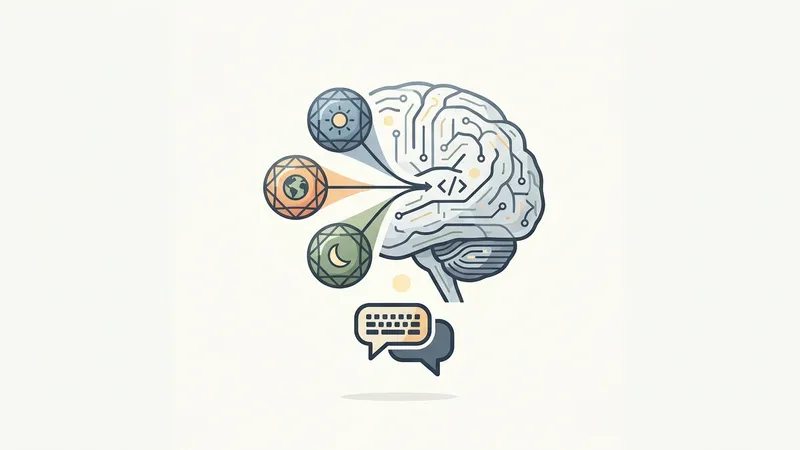
For the personal version upgrade, several core technologies have evolved. First, intelligent routing automatically maps the optimal path for tasks, reducing average task execution time by 20% and improving Token utilization by 25%. Second, full-terminal memory seamlessly syncs task states and user preferences across PC and mobile platforms. Most importantly, its Browser Use framework has transitioned from a VNC-screenshot-based approach to direct web-element manipulation, making information retrieval and navigation feel completely natural. Additionally, Baidu's decades of search assets and proprietary Skills like Miaoda and Fameu have been deeply integrated.
In real-world office scenarios, Baidu Dazi demonstrates exceptional practical execution. Given a messy, unstructured Excel sheet, the agent automatically executes background data cleaning upon a single prompt, color-coding anomalies and generating a clean, standard spreadsheet alongside a log tracking 759 changes across 303 records. In PPT slide generation, a simple prompt for a lesson plan on classic literature triggers specialized educational skills, generating structured outlines, context-aware AI images, and detailed speaker notes with timing suggestions—all fully editable.
For content creators, Baidu Dazi introduces a specialized social media suite, combining topic planning, competitor analysis, scriptwriting, and scheduling into a single dialogue workflow. Powered by its Hotspot Competitor Radar, the system monitors trending topics, suggests tailored angles, and pushes results directly to Feishu (Lark) or WeChat. This sense of delegation means executing the entire workflow end-to-end to deliver production-ready results, shifting human value strictly to decision-making and judgment.
[AgentUpdate Depth Analysis] The core breakthrough of Baidu Dazi lies in shifting the AI Agent competition from "sheer intelligence" to "engineered trust." Technically, it solves the long-context execution breakdown of multimodal agents in real software environments through Browser Use and cross-device state preservation. Comparatively, while Microsoft's Copilot is tightly bound to the Office suite and Anthropic's Computer Use still battles latency and high API costs, Baidu Dazi leverages localized search and deep-domain skills to excel in execution efficiency and task robustness in Chinese office environments. This marks a paradigm shift from "Copilot" to "Autopilot." In the future, the success of AI Agents will not depend solely on foundation model parameters, but rather on their "trust radius" and end-to-end delivery capabilities in complex, private workflows.