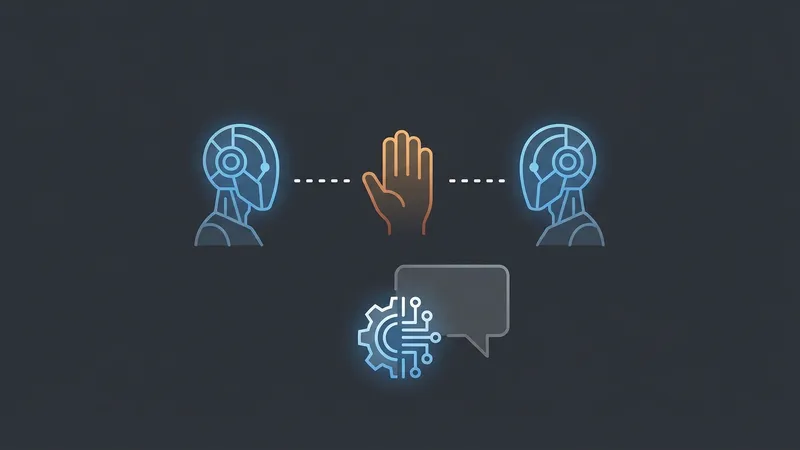
While models like GPT-5.5 and DeepSeek-V4-Pro excel in technical benchmarks, they often struggle with the nuances of human communication. The Intelligent Algorithm Security Lab at the Institute of Computing Technology (CAS) has unveiled Zing, a framework designed to imbue AI with social intelligence.
Central to this breakthrough is SoMBench, a comprehensive evaluation suite spanning 71 task types. It provides a granular assessment of how models interpret social cues and human intent. Current testing shows that even top-tier models fail to exceed a 90% accuracy threshold on these benchmarks, highlighting a significant "no man's land" in AI capability.
Zing addresses this through a self-evolving training system dubbed FLARE. By utilizing Mixed-Reward GRPO and OPD (On-Policy Distillation), the system enables models to acquire emotional and social depth without sacrificing their foundational reasoning skills. The Zing-27B model has notably outperformed GPT-5.5 in multi-modal social intelligence metrics, particularly in high-order belief tracking, proving that structured training design is superior to raw parameter scaling.
The system also integrates Actio, an explicit architectural deployment layer that utilizes Starling Memory to manage mental states, ensuring that AI responses are contextually appropriate for complex social settings.
[AgentUpdate Depth Analysis] The introduction of Zing marks a pivotal shift in the AI #Agent ecosystem: the transition from functional tools to socially aware partners. While previous focus remained largely on task execution logic, the industry has often neglected the "psychological consistency" required for human-AI collaboration. By turning emotional intelligence into a measurable, engineerable metric via #SoMBench, Zing addresses a critical pain point that generic large language models fail to resolve. The integration of the #FLARE data flywheel and OPD techniques provides a robust mechanism to prevent the catastrophic forgetting typical in reinforcement learning. This innovation is poised to redefine high-stakes interactive scenarios, such as healthcare diagnostics and professional team management. As the AI ecosystem matures, social intelligence will transition from a peripheral feature to a core requirement for agents, separating autonomous systems that merely perform tasks from those capable of maintaining long-term, human-aligned social cohesion.