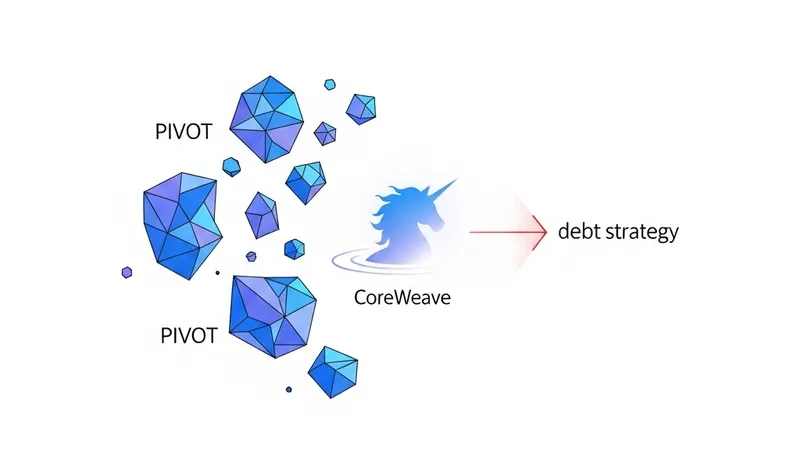
As a critical pillar in the AI compute #infrastructure landscape, CoreWeave is facing significant scrutiny from key investors. Recent reports indicate that the company is modifying its debt financing strategy, specifically regarding the structure linked to its high-value cloud computing contracts with Anthropic.
Previously, CoreWeave sought to leverage future #GPU compute revenue as collateral to secure more aggressive structured financing. However, this high-leverage model triggered concerns among shareholders regarding systemic risk. Investors highlighted that while deep partnerships with leading model labs like Anthropic ensure cash flow, the volatility of GPU demand and elevated interest rates make such debt arrangements increasingly precarious.
This pivot reflects a broader shift in how the capital market evaluates AI infrastructure providers. As the cost of NVIDIA hardware continues to exert pressure on balance sheets, infrastructure companies must now balance rapid physical expansion with long-term capital quality, meeting heightened investor demands for fiscal sustainability.
[AgentUpdate Depth Analysis] This adjustment by #CoreWeave is more than a mere financial correction; it signifies a maturation phase for the AI infrastructure ecosystem. As AI Agents transition toward widespread application, backend compute requirements have evolved from straightforward hardware leasing into complex financial engineering. The resistance faced by CoreWeave suggests that investors are moving past the initial 'gold rush' phase of stacking H100s, shifting their preference toward firms with robust, circular business models. For AI Agent developers, the stability of the underlying infrastructure is paramount, directly influencing the feasibility of inference-heavy workloads. Success in the next cycle of the AI Agent ecosystem will depend less on who can secure the most leverage and more on who can optimize the full software-hardware stack—reducing unit costs through superior orchestration and distributed computing. This transition will ultimately favor infrastructure providers that prioritize energy efficiency and architectural optimization over sheer capacity, setting the stage for the next evolution in Compute-as-a-Service for the Agent-centric economy.