With the explosive rise of generative AI, tech visionaries and economists are raising alarms over an unprecedented crisis: Could AI create a permanent underclass? The Financial Times recently published an in-depth analysis on this issue, highlighting how the #automation wave driven by large language models (LLMs) is rapidly consuming white-collar and knowledge-worker roles.
MIT economist and Nobel laureate Daron Acemoglu has long warned that if AI's development path focuses solely on 'replacing humans' rather than 'empowering' them, it will lead to severe social polarization. He refers to this as 'so-so automation'—technology that is just good enough to displace workers but not productive enough to create new high-value industries. Consequently, mid-skilled workers in administration, junior coding, and copywriting are squeezed out, forced into lower-paying physical service jobs like plumbing or caregiving, reinforcing social stratification.
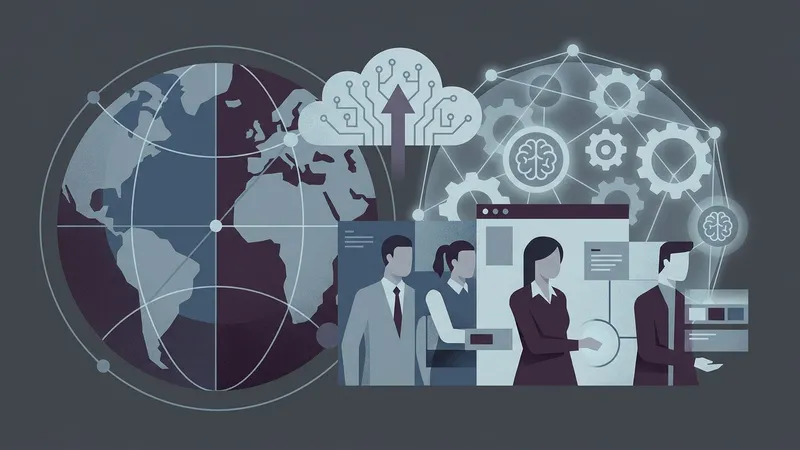
Unlike the Industrial Revolution, where machines replaced brawn and forced humans to use brainpower, AI directly targets humanity's core competitive advantage: cognitive reasoning and decision-making. Models like OpenAI's GPT-4 and Anthropic's Claude are evolving from 'copilots' into autonomous AI Agents capable of executing complex workflows. This paradigm shift means future enterprises might only require a tiny elite of AI operators, leaving the majority of the workforce without a clear path for career progression.
[AgentUpdate Depth Analysis] From the perspective of the AI Agent ecosystem, this 'cognitive democratization' is on the verge of a massive inflection point. As standardization protocols like the Model Context Protocol (#MCP) mature, AI Agents are transitioning from text-based chatbots into fully autonomous 'digital workers.' While this leap vastly boosts corporate efficiency, its underlying economic mechanism commoditizes human experiential assets into software algorithms. Within the Agent era, the traditional apprenticeship model for mid-level professionals risks collapsing; if junior tasks are completely delegated to Agents, the pipeline for cultivating future senior experts will dry up. For AI developers and ecosystem architects, the design paradigm must shift from pure end-to-end automation to robust Human-in-the-Loop collaborative architectures. Designing Agents as cognitive amplifiers rather than human replacements will be the defining challenge in shaping future wealth distribution and technology ethics.