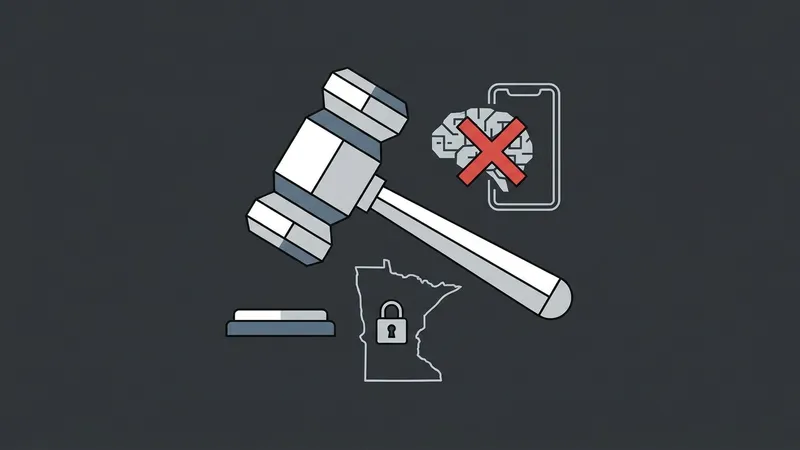
Despite a lawsuit filed by xAI, a Minnesota ban targeting apps that allow users to "nudify" images is set to move forward. U.S. District Judge Donovan Frank denied xAI's request for a temporary restraining order, as reported by NBC News.
Judge Frank’s ruling focused heavily on the timing of xAI’s filing rather than the law's constitutionality. He noted that xAI filed its request on July 29, 2026, nearly three months after the bill was signed and only three days before its scheduled effective date on August 1. "Such a delay in bringing the action and the motion suggests that harm is not immediate," Frank wrote.
This ruling does not mark the end of xAI's challenge; the lawsuit will proceed while the ban remains active. In its legal arguments, xAI claimed that the first-of-its-kind ban is "overinclusive" and that "far less restrictive alternatives" could achieve the same public policy goals.
The legal battle follows controversies from earlier this year, where users on Elon Musk’s social media platform X utilized xAI's Grok chatbot to generate and distribute non-consensual sexualized imagery, prompting widespread investigations and subsequent bans.
[AgentUpdate Depth Analysis] This ruling highlights a pivotal shift towards hard regulatory boundaries for generative AI. In the context of the AI Agent ecosystem, multi-modal agents like #Grok represent a double-edged sword: they offer unprecedented creation tools but also present severe safety risks if guardrails are bypassed. Comparing #xAI’s permissive alignment model with the highly restricted protocols of competitors like Anthropic and OpenAI, it is clear that "free-speech-first" AI systems are hitting a legal wall. For AI Agent developers, this lawsuit signals that safety and #compliance-as-a-service are becoming core architectural requirements rather than optional features. Future agents must integrate proactive content verification and policy-enforcing nodes directly into their reasoning loops, or risk facing immediate, localized legal shutdowns that can disrupt entire multi-agent workflows.