One day, 8 trillion tokens.
This is the single-day volume consumed by a single model, DeepSeek V4 Flash, within an AI programming tool. Open-source AI Agent platform OpenCode announced that the official version of #DeepSeek V4 Flash consumed 8 trillion tokens in a single day through its platform, with 5 trillion from free quotas and 3 trillion from paid plans. For comparison, the #LLM router platform OpenRouter, which hosts over 400 models, processes about 200 trillion tokens per month—averaging roughly 6.6 trillion tokens per day. This means DeepSeek V4 Flash, via just a single integration on OpenCode, surpassed the daily average volume of #OpenRouter's entire platform.
While this massive volume is linked to competitive pricing, it reveals a profound paradigm shift: how people use AI has fundamentally changed. Previously, a user asked a single question and received a response. Today's AI Agents autonomously read files, modify code, execute programs, verify outcomes, and retry upon failure. A single task can run for hours, invoking dozens of tool calls. While the final output code might not be significantly larger, token consumption can skyrocket exponentially. For instance, using Claude Opus 5 to build a single-page 3D game via iterative screenshot-testing loops consumed 690 million tokens for just one prompt, costing nearly $300.
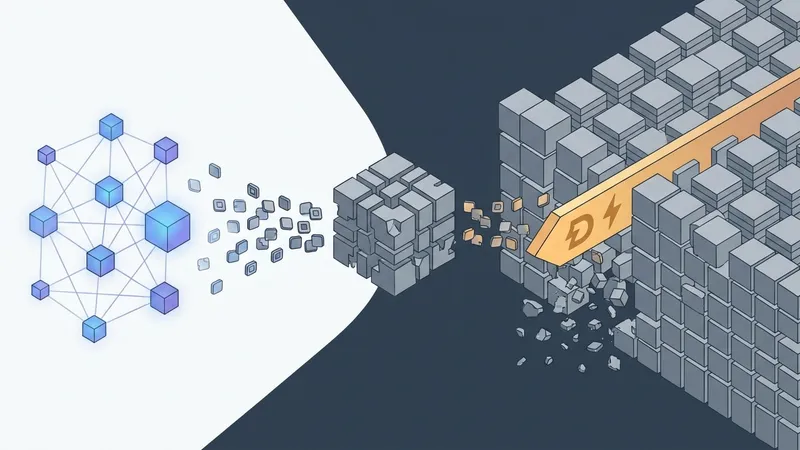
With agentic tasks surging, the metric for evaluating models has shifted from "how smart is a single response" to "how much does a long-horizon task cost, how long does it take, and how many times does it fail?" Under these criteria, DeepSeek V4 Flash has established a "kill threshold" for competitor models. At $0.28 (2 RMB) per million output tokens, its price gap with Anthropic's Claude Opus 4.8 ($25 per million tokens) is roughly 85-fold.
In Artificial Analysis' Intelligence Index v4.1, V4 Flash Max scored 50 while Claude Opus 4.8 Max scored 56. Running the entire benchmark suite cost $72.02 for the former, compared to $3,752.55 for the latter. While Opus scored 6 points higher, its run cost was 52 times higher. This price-to-performance dynamic makes V4 Flash the default choice. The hardest hit are not the highly specialized flagship models or cheap micro-models, but the middle-tier models: those slightly better than V4 Flash but costing dozens of times more, yet unable to reliably solve tasks V4 Flash fails at. DeepSeek's pricing strategy effectively squeezes these costly mid-tier models out of the market.
The secret behind DeepSeek's aggressive pricing lies in its inference architecture. Although V4 Flash has 284 billion total parameters, it only activates approximately 13 billion parameters per token, utilizing compressed sparse attention, low-precision weights, and context-caching optimizations. According to technical estimates, at a 1-million-token context window, V4 Flash's compute requirement per token is only about 10% of DeepSeek V3.2, with the KV Cache size reduced to just 7%.
Architecturally, the V4 series redesigns the Transformer block. It features CSA (Compressed Sparse Attention) and HCA (Hierarchical Compressed Attention) mechanisms in an interleaved pattern to balance performance and cost. For feed-forward layers, it utilizes DeepSeekMoE with fine-grained experts, routing each token to only a small subset of them. Consequently, even the flagship V4 Pro, with 1.6 trillion total parameters, only activates around 49 billion parameters per token, gaining the knowledge capacity of an ultra-large model without paying the computational price during inference.
[AgentUpdate Depth Analysis] The rise of AI Agents marks a fundamental paradigm shift from single-turn queries to complex, iterative workflows where execution cost determines viability. DeepSeek V4 Flash's disruptive pricing proves that "agentic scalability" is no longer just about raw intelligence, but the cost-efficiency of trial-and-error loops. By utilizing highly sparse MoE and compressed attention architectures (CSA/HCA), DeepSeek successfully decouples massive parameter capacity from active inference costs. This sets a formidable "kill threshold" for mid-tier models that offer marginal intelligence gains at exponential price premiums. For the broader AI Agent ecosystem, this shift accelerates the transition of LLMs into a high-volume commodity, forcing competitors to optimize inference architectures rather than relying on raw scale. Ultimately, the long-term success of agentic platforms will hinge on driving down the cost of multi-step, self-correcting loops to pennies per task.