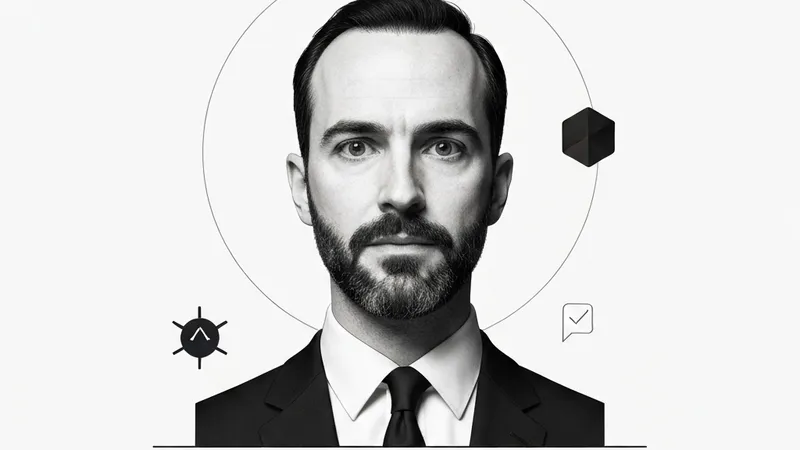
Recently, according to industry sources cited by venture capital firm Pathfounders, Demis Hassabis, the co-founder and former CEO of Google DeepMind, originally planned to depart #Google around the same time as Jeff Dean. However, fearing a severe blow to its stock price, Google's management pleaded with Hassabis to stay, ultimately reaching a compromise to retain him.
This led to the transition observed by the public: Hassabis stepped down as CEO of Google #DeepMind and was promoted to Chairman of DeepMind and Chief Scientist of Alphabet. Although the title appears grander, it is highly likely a tactical buffer. By relinquishing daily operational control, Hassabis secured a transitional role to allow the team and the market to adjust. Pathfounders even predicts that Hassabis may completely exit Google within a year.
Following Hassabis's step-down, former CTO Koray Kavukcuoglu assumed practical control of DeepMind's daily operations. Promoted to Senior Vice President of Google DeepMind, Koray now reports directly to Google CEO Sundar Pichai. Hassabis has stepped back into a role focused on research, long-term strategy, and external affairs. Over the past year, Hassabis had already been handing over daily management of Gemini models and consumer products to Koray, signaling that the execution of Google's AI strategy has officially transitioned.
Google went to great lengths to retain Hassabis because he is the technological figurehead of Google's AI endeavors. As the soul of DeepMind, his personal reputation is inextricably linked with successes like AlphaGo, AlphaFold, and his Nobel Prize. If both he and Jeff Dean had departed simultaneously, it would have signaled a complete collapse of DeepMind’s core leadership. This structural transition allows the market to build expectations, avoiding the shock of an abrupt departure.
Simultaneously, Google is consolidating its AI power back to its California headquarters. Koray Kavukcuoglu relocated from London to California over the past year to manage Google’s massive AI research and operations. Sebastian Borgeaud, lead for a key AI coding project, along with other researchers, has also moved to California or left the London office. Furthermore, scientific resources are being reallocated. According to the Financial Times, DeepMind has dissolved its standalone AlphaFold team, redirecting researchers to #Gemini, AI coding, genomics, and other commercial projects. Google is no longer letting its most critical AI talents operate independently outside headquarters.
Should Hassabis eventually depart, his next focus is highly anticipated to be Isomorphic Labs, an Alphabet-backed company he founded to accelerate drug discovery using AI. Hassabis has repeatedly emphasized that his original motivation for pursuing AI was to advance science and medicine—a vision now termed AI for Science. Before the launch of ChatGPT ignited the generative AI arms race, Hassabis preferred AI to remain in labs to solve grand scientific puzzles like cancer. As Google intensifies its rivalry with OpenAI, the misalignment between commercial demands and Hassabis's scientific ideals has become more pronounced, likely prompting his desire to step back.
[AgentUpdate Depth Analysis] Demis Hassabis’s transition and Google's consolidation of AI power in California expose a deep rift between immediate commercial monetization and fundamental scientific discovery. For the AI Agent ecosystem, this consolidation signals that Google is prioritizing engineering execution and product integration for Gemini. While this accelerates the deployment of practical agents in enterprise and consumer domains, dismantling independent research hubs like DeepMind’s AlphaFold team might stifle breakthrough innovations in foundational agent architectures (such as non-Transformer paradigms and autonomous reasoning). If Google over-indexes on product warfare at the expense of fundamental science, future AI Agents risk losing key algorithmic breakthroughs. Meanwhile, Hassabis's gravitation toward Isomorphic Labs indicates that AI for Science is emerging as a dominant parallel track, where specialized scientific agents might achieve true autonomous discovery in medicine and materials science far ahead of generalist counterparts.