When an AI agent can act on a production server at a bank or a hospital, access to a capable foundation model is only the starting point. Recent public incidents, in which autonomous agents took destructive actions their operators never intended, show that the real risk is rarely the model alone. It’s an agent holding more authority than its task requires, with nothing in the architecture to stop it. Avoiding that starts with a substrate that governs model access at the infrastructure level.
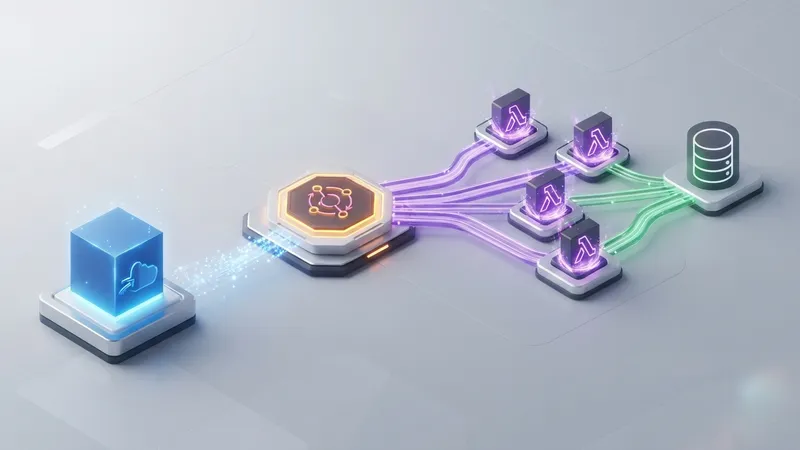
Amazon Bedrock provides that substrate. Through a single managed interface, it gives DXC OASIS access to multiple foundation models: Anthropic Claude, Amazon Nova, Meta Llama, and open-weight families. Amazon Bedrock Guardrails enforce content filtering, personally identifiable information (PII) redaction, and denied-topic policies uniformly across every model. AWS PrivateLink keeps inference traffic within the customer’s virtual private cloud (VPC), and serverless scaling avoids self-managed GPU infrastructure as a failure point. Because these are system-level controls rather than bolt-ons, they gave DXC Technology a governed foundation for what no model layer can deliver on its own: a trusted harness that orchestrates, governs, and audits AI agents across enterprise IT operations at scale.
Model availability varies by AWS Region. See Supported models by AWS Region in Amazon Bedrock.
DXC Technology runs managed IT services for some of the world’s most regulated organizations: banks, hospitals, and government agencies. With more than 115,000 employees across 70 countries, DXC operates mission-critical systems where resilience and governance are non-negotiable. When DXC set out to build DXC OASIS, the harness for mission-critical IT operations, the team separated the problem into two layers. The first is a governed model substrate built on Amazon Bedrock. The second is the trusted harness built on top: DXC’s own orchestration, governance, and assurance layer.
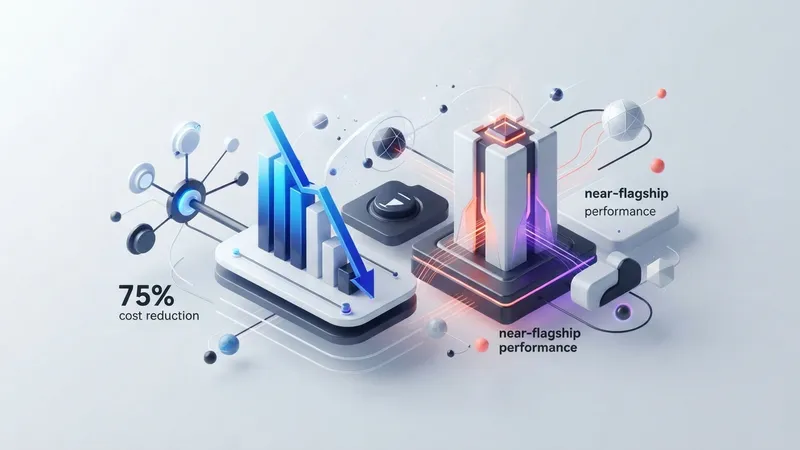
In this post, we explore how DXC built the resilient, flexible model substrate beneath DXC OASIS on Amazon Bedrock. We also show where DXC drew the line between what the substrate provides and what the harness must provide. Since general availability in March 2026, DXC OASIS has reduced resolution time by 95% on average across 56 measured use cases.
Across every model, customer data stays within the AWS data boundary: prompts and completions are not shared with third-party model providers and are not used to train the underlying foundation models.
“Our customers operate complex, business-critical environments and need both choice and resilience in how they adopt AI. Amazon Bedrock provides access to a broad ecosystem of models with the governance, security, and operational controls required at enterprise scale. That flexibility allows us to use…”
[AgentUpdate Depth Analysis] DXC’s approach signals a pivotal shift: enterprise AI agent competition is moving from “model capability” to “governance substrate.” Unlike orchestration-centric frameworks such as LangChain or CrewAI, DXC pushes model access, content filtering, PII redaction, and network isolation down to the infrastructure layer (Bedrock #Guardrails + PrivateLink), effectively providing a “security kernel” for the agent ecosystem. In comparison, OpenAI’s Assistants API and Anthropic’s Claude Agent SDK focus more on tool invocation within a single-model ecosystem, whereas Bedrock’s multi-model substrate lets enterprises switch between Claude, Nova, and Llama under one governance policy, avoiding vendor lock-in. Looking ahead, this “substrate + harness” layered architecture could become the standard paradigm for large-scale AI agent deployment: the substrate handles compliance and resilience, while the harness handles business logic and auditing. For global tech practitioners, the key takeaway is how to replicate similar governance abstractions in their own cloud environments—especially in highly regulated sectors like finance and healthcare, where agent permission boundaries must be enforced by infrastructure, not prompts. The 95% reduction in resolution time across 56 use cases also demonstrates that governance is not the enemy of efficiency; it is the prerequisite for scalable trust.