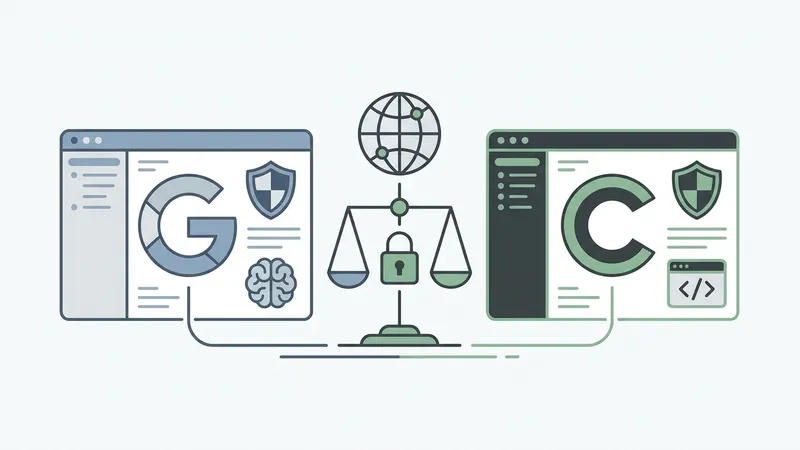
As AI technology evolves, enterprise software development is undergoing a fundamental shift from simple code completion to autonomous programming agents. When deploying AI coding tools for a 500-seat engineering team, enterprise decision-makers focus less on generic code generation rates and more on critical pillars of security, compliance, and cost: IP Indemnity, Data Residency, and total cost of ownership (TCO).
In terms of IP protection, GitHub Copilot Enterprise provides some of the industry's most robust IP indemnity policies, shielding enterprises from legal claims regarding copyright infringement of training data. Conversely, rising stars like Cursor, despite leading in UX and agentic capabilities, offer varying levels of IP protection across subscription tiers, typically requiring customized Enterprise agreements for equivalent legal safeguards.
For data compliance and residency, governed by regulations like GDPR, enterprises in highly regulated sectors require strict assurances that their proprietary codebases will not be used for model training. Currently, both GitHub and Cursor guarantee Zero Data Retention (ZDR) for enterprise clients and support localized data processing. However, for organizations demanding true air-gapped or VPC deployments, there is surging interest in self-hosted agent frameworks powered by open models like Llama 3.
Comparing the annual TCO for a 500-seat deployment reveals distinct pricing paths:
- GitHub Copilot Enterprise: Priced at $39/user/month, totaling $234,000 annually.
- Cursor Business/Enterprise: Business plans start at $40/user/month, while customized Enterprise contracts for 500 seats range from $40 to $80/user/month, bringing the annual cost to $240,000 - $480,000.
- Cognition Devin or other fully autonomous agents: Mostly utilize consumption-based pricing (per token or run-hour), making seat-based TCO highly variable and harder to budget at scale.
[AgentUpdate Depth Analysis] The evolution of AI coding tools from autocomplete plug-ins to multi-tool collaborative AI Agents (leveraging frameworks like MCP) creates a tension between productivity gains and compliance risks. In the short term, GitHub leverages its enterprise trust and robust IP indemnity to maintain a dominant position in large-scale deployments. However, agile platforms like #Cursor are closing the enterprise gap by securing SOC 2 certifications and offering multi-model flexibility. The ultimate battleground for coding agents lies in deep integration into the enterprise Software Development Lifecycle (SDLC) within private, secure sandboxes. Over time, we expect a paradigm shift from seat-based licensing to task-based or outcome-based monetization, completely redefining the economics of software engineering.