The recent release of the open-weights flagship model GLM-5.2 by Z.ai has ignited intense debate across the tech community. Some herald it as the death knell for proprietary models, while others dismiss it as mere #benchmark gaming. To uncover the truth, this article synthesizes independent hands-on testing by James Daniel Whitford at TechStackups, independent benchmarks from Artificial Analysis, and developer discussions on Hacker News, helping you determine which model fits your engineering workflow.
Released under the permissive MIT license, GLM-5.2 is Z.ai's latest flagship model available for local download or via API. Featuring a massive 1 million token context window, it is specifically optimized for long-horizon AI Agentic workflows such as multi-hour autonomous coding. Crucially, however, GLM-5.2 remains text-only, lacking the multimodal capabilities of Claude Opus to interpret images, UI screenshots, or structural diagrams—a limitation that yields substantial differences in practical applications.
The pricing disparity between the two is stark. For every 1 million tokens, the rates compare as follows:
| Metric (per 1M tokens) | Claude Opus 4.8 | GLM-5.2 |
|---|---|---|
| Input | $5.00 | $1.40 |
| Cache read | $0.50 | $0.26 |
| Output | $25.00 | $4.40 |
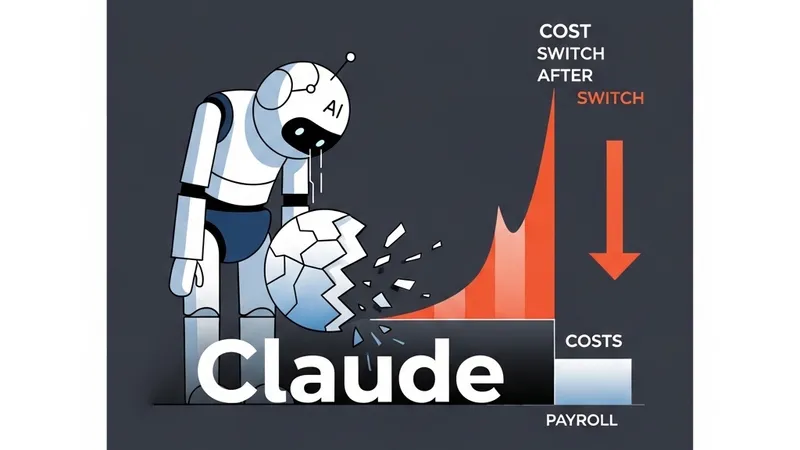
This represents an 80% reduction in output costs for GLM-5.2. For developers running autonomous agents continuously, this cost delta compounding over time is massive, although Hacker News users note that flat-rate $100/month subscriptions for #Claude Max can narrow this gap for heavy users.
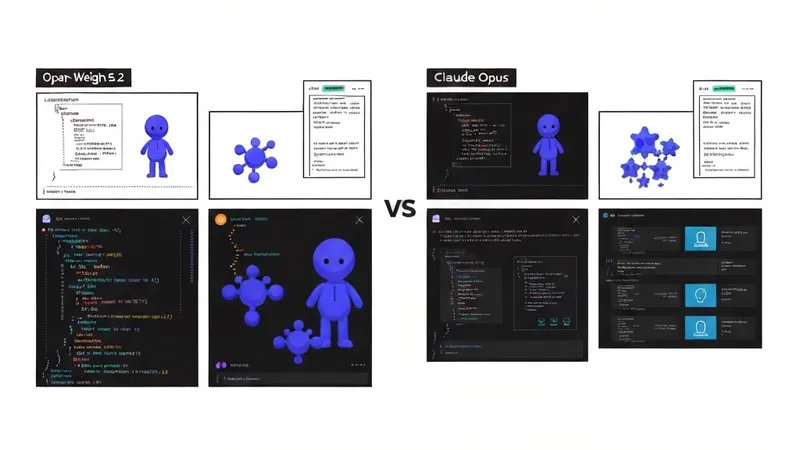
To put their capabilities to a rigorous test, both models were given a highly demanding one-shot prompt: build a third-person 3D platformer game from scratch in raw WebGL without any external libraries. The task required writing a character controller, collision detection, a following camera, a GLB model loader, custom GLSL shaders, and skeletal animations. This is a highly complex test of interdependent systems where a single code error breaks the entire execution.
Here are the performance metrics from the head-to-head run:
| Metric | GLM-5.2 | Claude Opus 4.8 |
|---|---|---|
| Build time | 1h 10m 40s | 33m 30s |
| Output tokens | 131,000 | 216,809 |
| Cost | $5.39 | ~$21.92 (estimated) |
| Tool calls | 128 | 153 |
In terms of output quality, Claude Opus delivered a vastly superior game. The character was properly textured, the camera controls felt natural, the obstacle hazards worked perfectly with a functional win condition, and bugs were minimal. GLM-5.2 delivered a much rougher prototype: the character was rendered as a flat gray textureless block, obstacle hitboxes failed to trigger, and the win condition was entirely missing. This demonstrates that for complex, multi-system software engineering tasks, top-tier closed models still hold a substantial lead in logical cohesion.
[AgentUpdate Depth Analysis] This WebGL benchmark highlights a pivotal shift in the AI Agent landscape. Open-weights models like GLM-5.2, with permissive MIT licensing and extreme cost-efficiency, are rapidly democratizing the deployment of specialized, local developer agents. However, for highly coupled, long-horizon tasks, proprietary models like Claude Opus still maintain a clear cognitive advantage in reasoning depth and Tool Calling reliability. Moving forward, the #agent ecosystem will likely bifurcate: high-volume, well-defined atomic tasks will migrate to open-source models, fueling local and edge agent growth. Conversely, complex, cross-modal workflows requiring vision and sophisticated multi-step logic will continue to rely heavily on proprietary frontier APIs. For open-weights models to truly disrupt this hierarchy, they must close the gap in long-context consistency and structural error correction.