Backed by its internal AI tools, Google has announced that it patched more security flaws in its Chrome browser last month than in the previous two years combined. This dramatic leap highlights how AI is reshaping the landscape of digital defense.
The tech giant revealed that it fixed a staggering 1,072 security bugs across the latest two versions of Chrome released in June (Chrome 149 and Chrome 150). To put this in perspective, the previous 23 versions released over the last two years yielded a total of 1,036 fixes.
Cybersecurity experts have long warned that LLM-powered systems would enable bad actors and defenders alike to discover vulnerabilities at an exponential scale. Google's newly published white paper and charts now provide concrete data validating this shift.
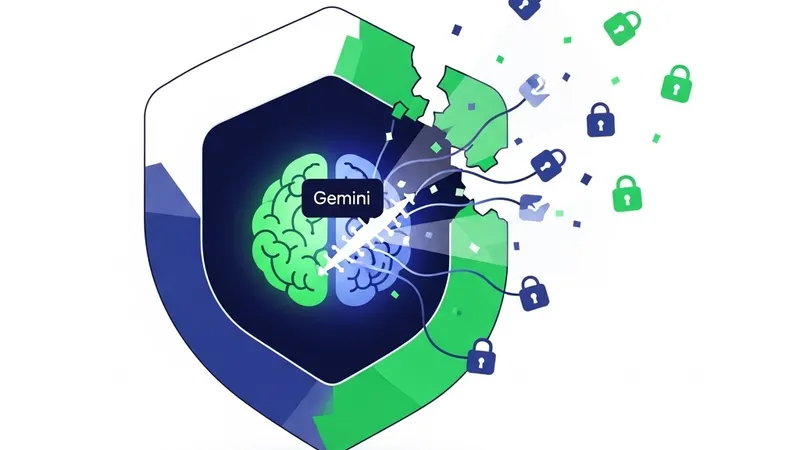
Doug Turner, Chrome's director of engineering, stated that LLMs have "fundamentally shifted the economics of #cybersecurity, transforming vulnerability discovery into an automated, industrial-scale operation." He added that by leveraging Gemini models, Google is preemptively fixing vulnerabilities and outpacing adversaries.
This trend is spreading across tech giants. Microsoft recently patched a record 570 security flaws during its monthly "Patch Tuesday," attributing the surge to its own AI integration. Conversely, Apple has patched 482 bugs so far in 2026, keeping a pace similar to previous years without showing an AI-driven exponential spike.
[AgentUpdate Depth Analysis] Google's breakthrough in Chrome patching is a clear indicator that AI Agents are transitioning from simple code assistants to fully autonomous #DevSecOps agents. By closing the loop of vulnerability identification, patch generation, and automated testing, AI Agents bypass the high false-positive rates of traditional static analysis. Unlike logic-heavy agents plagued by hallucination, code-level repair agents thrive due to deterministic environments (compilers, test suites, and sandboxes) that offer instant reinforcement. This marks the onset of "Agent vs. Agent" cyber-warfare, where the bottleneck of software security shifts from human developer bandwidth to the orchestration and scale of specialized autonomous agents.