Did Google actually build a ChatGPT equivalent a year before OpenAI did? This is no longer historical revisionism. Recently, Tibo (Thibault Sottiaux), the current head of Codex at OpenAI and a former #Google/DeepMind engineer, stepped forward to confirm this long-standing rumor.
The revelation was sparked when a Midjourney engineer on X brought up an old interview with former Google Brain head Jeff Dean. In the interview, Dean mentioned that Google had an internal chatbot prior to ChatGPT, but leadership decided it wasn't as useful as standard Google Search. Tibo responded to the post, confirming that the project, originally codenamed LMChat, indeed existed and was practically a year-early version of ChatGPT.
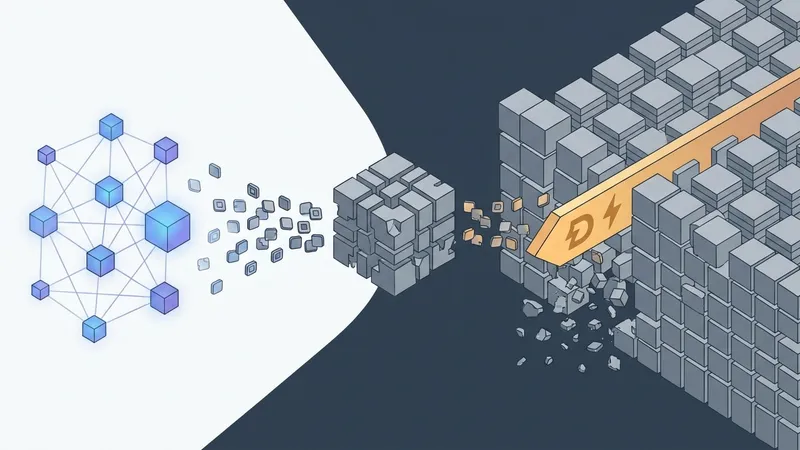
Explaining why it was shelved, Tibo pointed out that Google executives were extremely nervous about its potential impact on their cash-cow "Search and Ads" model. Furthermore, DeepMind was explicitly barred from releasing products that could disrupt Google's core business. Google's incredibly high benchmark—demanding that any new product be demonstrably better than mature, hallucination-free search results—ended up hamstringing the company. This hesitation has proved to be one of the most expensive blunders in tech history.
This conservative posture not only cost Google its first-mover advantage but also triggered a severe talent drain to its fiercest rivals:
- Noam Shazeer, co-author of the seminal 2017 Transformer paper, whom Google spent $2.7 billion to bring back alongside Character.AI, recently jumped ship to OpenAI.
- John Jumper, the former VP at DeepMind who won the Nobel Prize in Chemistry for AlphaFold, recently left for Anthropic.
- Following Jumper, key Gemini contributors Jonas Adler (AI coding lead) and Alexander Pritzel (pre-training expert) also defected to Anthropic.
This saga mirrors the classic "Xerox PARC dilemma." In the 1970s, Xerox invented the GUI, mouse, and Ethernet, but shelved them because they didn't directly sell more toner or paper. Steve Jobs capitalized on this mistake to build the Macintosh. Today, Google, having invented the Transformer architecture, finds itself in a similar trap, suffering from corporate inertia in the AGI race.
[AgentUpdate Depth Analysis] The demise of LMChat and Google's ongoing talent drain serve as a critical case study for the evolving AI Agent ecosystem. In the Agent era, raw technical capabilities do not guarantee market dominance. While incumbents like Google hold massive compute and foundational model advantages, their legacy UX paradigms and business models create a classic Innovator's Dilemma. In contrast, AI Agents require high execution autonomy and lower friction to close the loop on end-to-end tasks. Agile startups like OpenAI and Anthropic are winning not just because they ship faster, but because they provide a fertile ground for scientists who want to see their research actively act upon the world rather than sit in research labs. The battleground for AI Agents is shifting from static benchmarks to active agency. Google's reluctance to cannibalize its search revenue with a conversational agent reminds us that in the next paradigm shift, those who hesitate to empower autonomous, action-oriented agents will inevitably suffer the same fate as Xerox.