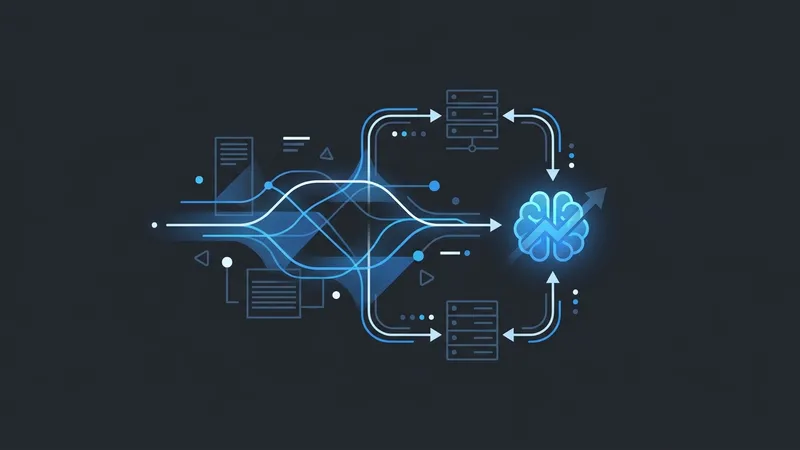
OpenAI's vision of Recursive Self-Improvement (RSI) is officially materializing. In its latest technical report, #OpenAI disclosed that GPT-5.6 has been deployed in actual production environments to optimize the very infrastructure it runs on. Co-authored by five elite researchers, including Philippe Tillet (the creator of Triton), this engineering breakthrough has reduced end-to-end service costs by 20% and boosted token generation efficiency by over 15%.
Rather than achieving full-blown #RSI where a model fully trains its successor, GPT-5.6 focuses on transforming its execution environment. The model operates within a live feedback loop executing four key tasks: analyzing real-time production traffic to adjust routing; rewriting and optimizing core GPU kernels using Codex to modify Triton and Gluon kernels; automated tuning of its speculative decoding system; and dynamically searching for optimal hyperparameter combinations (such as KV Cache and batching configurations) for diverse workloads.
While humans remain in the loop to control safety boundaries and final code deployment, OpenAI is also addressing external Agent latencies. To minimize overhead from repetitive agentic loops, OpenAI developed a Rust-based Agent Harness. This harness utilizes "lazy discovery" of MCP tools to prevent context bloat and enforces an "append-only" context architecture to maximize the hit rate of Prompt Caching. These software-level optimizations, combined with model-driven tuning, have led to a massive increase in internal developer productivity, with OpenAI's internal Agent token consumption growing 22x over the last six months.
[AgentUpdate Depth Analysis] The self-optimization paradigm demonstrated by GPT-5.6 represents a paradigm shift from static software engineering to dynamic, model-driven infrastructure. Traditionally, compiling kernels and routing traffic required human expertise and rigorous manual tuning. By allowing the LLM to write its own #Triton kernels and orchestrate its own speculative decoding parameters, OpenAI has shown that the runtime environment itself can become an adaptive agentic system. This recursive feedback loop is crucial for the AI Agent ecosystem: it lowers the marginal cost of compute, which is currently the biggest bottleneck for multi-turn agent deployments. As frameworks like Agent Harness standardize these efficiencies, we are moving closer to fully autonomous, self-healing, and self-scaling Agent architectures that continuously optimize their own cognitive substrate.