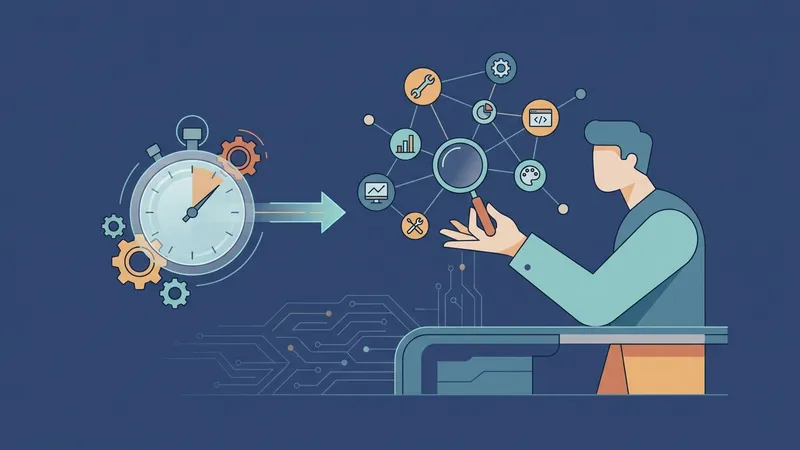
In today's rapidly evolving business landscape, artificial intelligence is profoundly redefining what it means to "work." According to a new report from OpenAI, generative AI is not merely a tool for saving time; it is fundamentally expanding the boundaries of what employees can achieve, enabling non-technical staff to tackle tasks that once required highly specialized expertise.
The report highlights that with the deployment of ChatGPT Enterprise, organizations are witnessing a bottom-up explosion of capability. Biopharma giant Moderna serves as a prime example, where employees have built numerous custom GPTs to assist with clinical trial design, translation, and complex regulatory reporting, compressing weeks of research support into mere hours.
Similarly, global investment firm Carlyle has empowered its investment analysts with AI. By leveraging custom-built AI agents, analysts can rapidly digest and synthesize vast financial reports and market data, resulting in a 3x to 4x increase in efficiency. This transformation underscores that AI's true value lies not in replacing human judgment, but in dismantling technical barriers and amplifying strategic thinking.
Currently, over 92% of Fortune 500 companies are actively integrating OpenAI's technologies into their workflows. By building low-code or no-code automated solutions for daily tasks, employees are freeing themselves from administrative overhead to focus on high-value creative and strategic initiatives.
[AgentUpdate Depth Analysis] Traditional enterprise digital transformation focused heavily on replacing human labor with rigid software, whereas generative AI, exemplified by ChatGPT Enterprise, champions cognitive augmentation. From the perspective of the AI Agent ecosystem, the widespread enterprise adoption of custom GPTs serves as a massive pilot for No-code Agents. Unlike legacy, brittle RPA systems, LLM-based agents offer unparalleled semantic flexibility and dynamic planning. Moving forward, the core competency of enterprise employees will shift from tool execution to "Agent orchestration" and "workflow architecture." This shift will fundamentally reconstruct corporate knowledge management and accelerate the deployment of autonomous end-to-end agents.