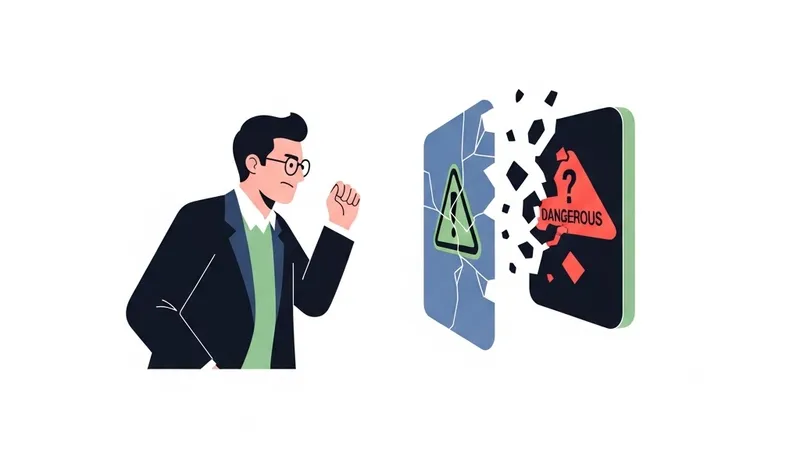
As artificial intelligence safety standards tighten globally, the debate over how to define and regulate critical safety thresholds is intensifying. Recently, Clément Delangue, co-founder and CEO of the leading open-source AI platform Hugging Face, weighed in on the practice of proprietary labs like Anthropic labeling their advanced models as potentially 'dangerous.' Delangue argued that proprietary, closed-door risk classifications lack objective benchmarks and could trigger unnecessary panic within the ecosystem.
This discussion comes in the wake of #Anthropic implementing its rigorous Responsible Scaling Policy, which defines AI Safety Level 3 (ASL-3) thresholds. Under this framework, models exhibiting high-risk capabilities in cybersecurity, biological hazards, or autonomous replication trigger strict physical and digital security protocols. Delangue, however, pointed out that such self-imposed, opaque grading systems risk acting as regulatory moats that block open-source developers and academic researchers from accessing state-of-the-art architectures.
Delangue advocated strongly for shifting the paradigm toward collaborative, community-led safety research. He emphasized that the global research community must leverage open-source transparency, decentralized red-teaming, and open evaluation suites to collectively manage safety risks without compromising technological democratization.
[AgentUpdate Depth Analysis] The philosophical divide between Anthropic’s proprietary containment and Hugging Face’s open auditing represents a critical inflection point for the AI Agent ecosystem. As agents transition from passive chat interfaces to autonomous entities with agentic workflows, complex tool execution, and code-generation capabilities, rigid 'danger' labels could severely bottleneck their deployment in high-value enterprise domains like automated penetration testing and biochemistry. A dynamic, decentralized safety framework is required. Interoperability protocols like the Model Context Protocol (#MCP), paired with standardized containment sandboxes and real-time observability tools, offer a more viable path forward. This allows developers to modularize safety, maintaining the agent's autonomous reasoning while ensuring robust, community-validated operational boundaries rather than relying on vendor-locked, top-down safety restrictions.