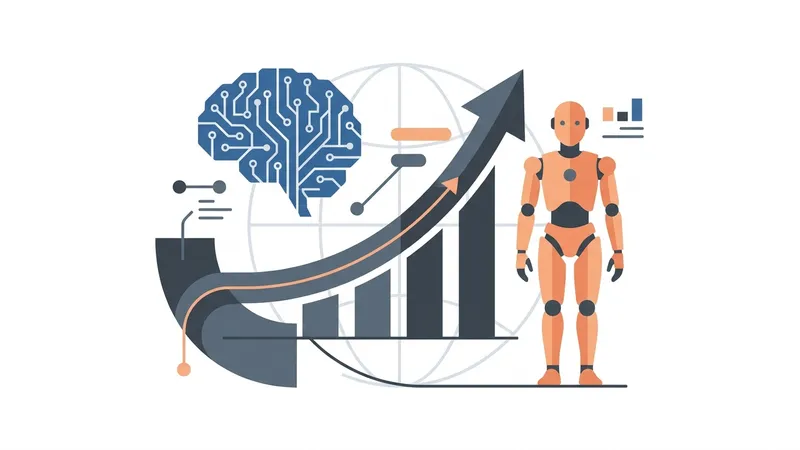
In recent years, systems engineering pioneers led by Jeff Dean and connectionist researchers have driven the massive boom of deep learning centered around Scaling Laws. However, as parameter sizes approach physical and data limits, deterministic deep learning that relies solely on brute-force compute and data scaling is hitting a wall. Leading scientists are quietly shifting their focus to a more robust paradigm: Bayesian AI.
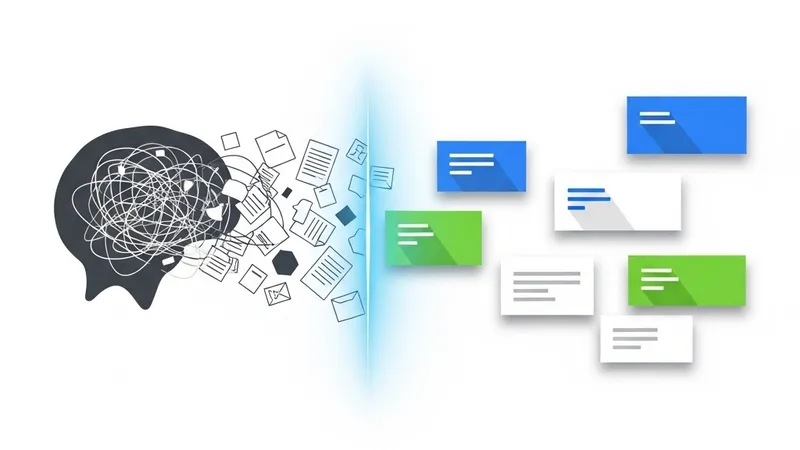
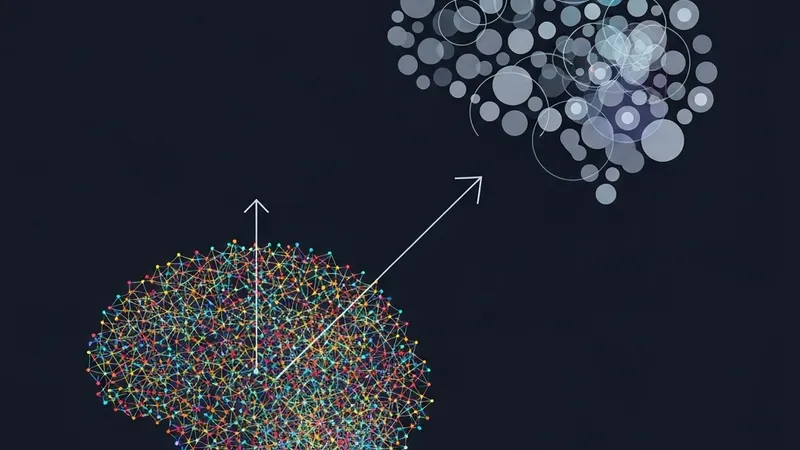
Traditional neural networks operate as "black boxes" that excel at finding correlations in vast datasets but fail to quantify their own uncertainty. In contrast, Bayesian AI merges probability theory with causal inference, allowing models to maintain a "belief state" and perform posterior probability updates when facing uncertainty or data scarcity. This leap from intuitive association to probabilistic reasoning is the key to solving LLM hallucinations and lack of interpretability.
Indeed, Bayesian frameworks, including Karl Friston's theory of Active Inference, are actively reshaping the underlying design of AI Agents. Forward-looking researchers in both academia and industry are pivoting now because they realize that cognitive architectures based on uncertainty estimation are the true path to Artificial General Intelligence (AGI).
[AgentUpdate Depth Analysis] The disruptive impact of Bayesian AI on the AI Agent ecosystem lies in upgrading agents from "passive, reactive entities" to "active, predictive systems." Current agents (such as those built on LangChain or AutoGen) essentially use deterministic prompts to coax probabilistic outputs, resulting in low fault tolerance and poor handling of out-of-distribution (OOD) tasks. By integrating Bayesian frameworks, agents can explicitly model environmental uncertainty, reducing entropy through active sampling—akin to human-like strategic thinking. This paradigm shift will fundamentally resolve persistent bottlenecks in agent architectures, such as long-horizon planning failures and cascading errors, paving the way for enterprise-grade deployment in high-stakes fields like healthcare, autonomous driving, and scientific discovery.