Anthropic may need to accelerate its IPO plans, especially as OpenAI reportedly missed its optimal window and postponed its own. Now, even Anthropic's explosive growth could face headwinds as enterprises tighten their AI spending and pivot toward cheaper, highly competitive alternatives.
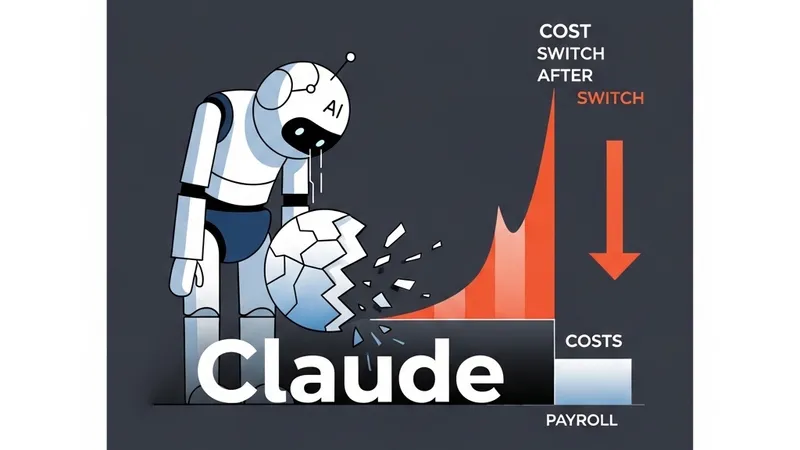
AI startup Lindy serves as a prime example of this shift. CEO Flo Crivello announced that the company has entirely ditched Claude in favor of DeepSeek, hosted by a US provider on US soil. This transition caused their AI costs to "crash to the ground," saving the company millions of dollars. For the 25-person startup, the previous AI expenses had become "unsustainable," even exceeding their entire personnel payroll. Crivello noted that while he would consider switching back if Anthropic cut its prices, sticking with cheaper models is currently "a matter of survival for the business."
This cost pressure is echoed across the industry. A recent analysis by Snowflake's CEO highlighted that affordable models like GLM-5.2 are highly competitive on a price-performance basis depending on the task, even if they don't quite match #Claude's peak capabilities. Furthermore, OpenAI CEO Sam Altman recently acknowledged that AI cost has become a "huge issue" for enterprises, particularly with the industry-wide transition toward AI Agent systems that burn through tokens at an unprecedented rate.
[AgentUpdate Depth Analysis] #Lindy's migration from Claude to #DeepSeek underscores a critical shift in the AI Agent era: the dominance of Token Economics. Unlike static chatbots, agentic workflows require continuous, multi-step reasoning, self-correction, and tool call loops, which exponentially amplify token consumption. In this environment, a model's price-to-performance ratio becomes the ultimate deciding factor for commercial viability. This trend will likely trigger aggressive price reductions from premium LLM providers like Anthropic, while accelerating the adoption of hybrid, multi-model agent architectures. For the broader Agent ecosystem, cost-efficiency is no longer just a budget concern—it is the foundational constraint that dictates whether autonomous agents can scale from experimental prototypes to profitable enterprise-grade solutions.