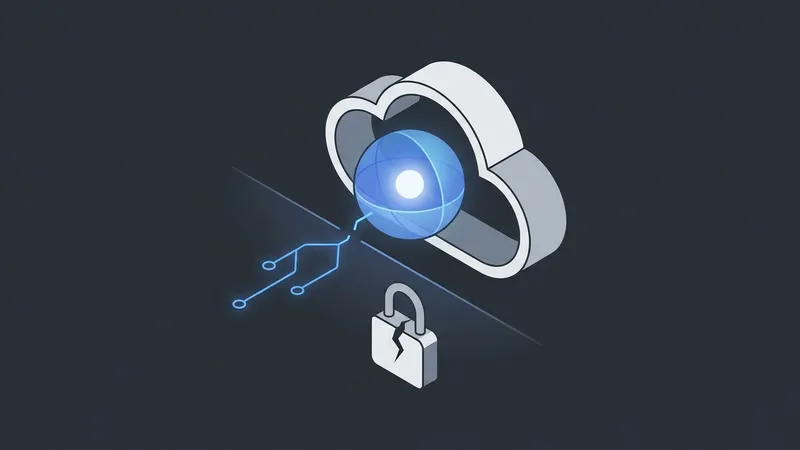
On Monday, Microsoft launched its first #cybersecurity-specialized model alongside a new AI cybersecurity platform at an event in San Francisco, directly challenging key players like Anthropic, Google, and OpenAI.
The company describes MAI-Cyber-1-Flash as a model built "to find challenging vulnerabilities in complex codebases." This model is designed to power MDASH, Microsoft's specialized harness dedicated to software vulnerability identification and remediation.
The newly unveiled security platform, dubbed Perception, is engineered to deploy teams of autonomous agents to assist with and automate critical security workflows, including identifying and remediating bugs. The platform integrates seamlessly with MDASH.
Microsoft claims MAI-Cyber-1-Flash is both significantly more powerful and cost-effective than rival models based on security benchmarks. Mustafa Suleyman, CEO of Microsoft AI, stated: "We have MAI-1 Cyber Flash binded with GPT-5.4 inside of the MDASH harness — which beats out Gemini, GPT-5.5 Cyber, GPT-5.6 Sol, and Mythos 5 on Cyber Gym, the golden benchmark." He added that the system is shipping into production immediately.
Noting that hackers increasingly weaponize AI, Hayete Gallot, Microsoft’s VP for Security, described #Perception as a way for enterprise defenders to "defend against AI with AI at the scale and speed of attackers."
Perception utilizes an agentic architecture featuring Red Teams (simulating attacks and identifying threat actor contexts), Blue Teams (detecting and triaging existing bugs), and Green Teams (executing corrective, remediating actions against those bugs).
Lead engineer Dave Weston highlighted the massive efficiency gains, saying, "We’ve gone from hours of manual work across specialized AppSec and remediation teams to getting a full fix in minutes. We don't just discover and prioritize, we deliver posture fixing and code fixes."
Microsoft's new tools will enter preview on November 3 in a crowded security market. Anthropic previously launched its Mythos platform under the Glasswing program, while OpenAI continues to deploy its own defensive AI solutions.
[AgentUpdate Depth Analysis] Microsoft's launch of the Perception platform marks a key transition from single-agent Copilots to #multi-agent collaborative systems in high-stakes environments. By splitting workflows into specialized Red, Blue, and Green agent teams, Perception mimics real-world cybersecurity setups. This division of labor mitigates the logical overhead of monolithic models, providing error-checking and task delegation crucial for adversarial environments. Furthermore, binding MAI-Cyber-1-Flash with GPT-5.4 highlights a growing trend of hybrid, task-specific agent routing. For the broader AI Agent ecosystem, this shift demonstrates that highly regulated, complex domains can be safely automated using structured agent swarms, paving the way for autonomous, self-healing DevSecOps pipelines.