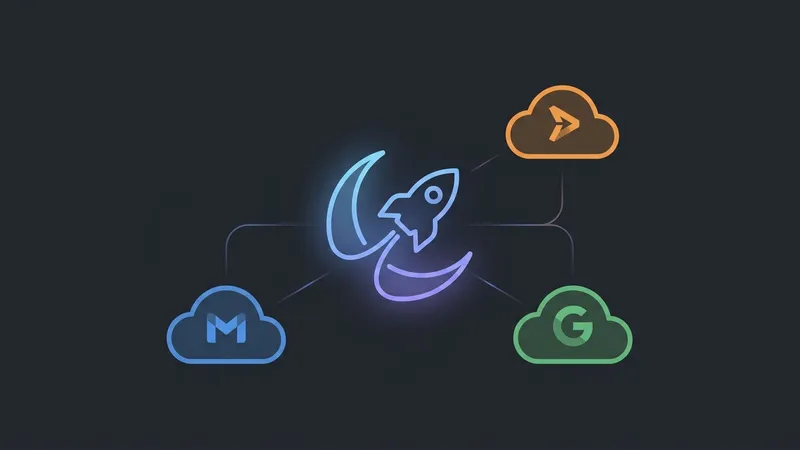
According to sources familiar with the matter, Chinese AI unicorn Moonshot AI (the creator of the popular AI assistant Kimi) is currently in active negotiations with the "Big Three" global cloud providers—Microsoft Azure, Amazon AWS, and Google Cloud. The company aims to host its LLMs on their marketplaces and is reportedly demanding a revenue share of up to 30% on sales generated through these platforms, signaling a bold move by Chinese LLM developers to monetize their tech globally.
In traditional cloud marketplaces, cloud vendors act as distributors and take a nominal platform fee from third-party software sellers. However, the rise of the Model-as-a-Service (#MaaS) model has flipped the dynamics, granting top-tier AI model developers unprecedented leverage. #Moonshot AI's demand for a 30% cut directly challenges the established profit-sharing models of cloud giants, demonstrating that high-performance AI models are becoming the premier commodity of the cloud era.
While negotiations are still in the early stages and have not been finalized, this strategic push highlights the global ambition of Chinese AI firms. Partnering with global cloud leaders allows Moonshot AI to bypass compliance and heavy infrastructure costs while leveraging global sales networks to reach enterprise clients. For the cloud providers, integrating #Kimi's renowned long-context capabilities is crucial to enrich their own AI portfolios and attract enterprise developers.
[AgentUpdate Depth Analysis] This bold negotiation underscores a critical power shift in the AI value chain from raw infrastructure to specialized cognitive intelligence. In the emerging AI Agent ecosystem, high-context and highly efficient LLMs serve as the "brain" driving autonomous agents. By demanding a 30% revenue share, Moonshot AI is establishing a precedent where model intellectual property dictates terms to hardware and hosting providers—reminiscent of the "Apple Tax" but reversed in favor of the software creator. For the AI Agent ecosystem, this tectonic shift will likely force cloud giants to transition from mere compute resellers to value-added ecosystem partners. While this could introduce short-term pricing fluctuations for downstream Agent developers, it ultimately fosters a healthier, highly competitive market where superior model capability dictates economic value rather than raw infrastructure access.