According to reports, OpenAI has quietly purchased tens of thousands of Mac mini and Mac Studio machines, occasionally triggering retail shortages. Similarly, Anthropic is renting massive fleets of Mac mini instances via AWS. Instead of regular office work, these consumer-grade devices are being utilized for highly intensive AI reinforcement learning workloads.
The driving force behind this buying spree is the race to train "computer-use agents"—AI systems capable of autonomously navigating operating systems, writing and executing code, organizing emails, and summarizing documents. Driven by this demand, Apple’s Mac segment saw revenue jump nearly 29% year-over-year to 10.3 billion. To capitalize on this, Apple hosted a rare enterprise-focused "Business at the Park" event, with Anthropic co-founder Jared Kaplan in attendance, where the Mac mini was showcased as the star hardware.
While Nvidia GPUs still dominate general AI training, Mac devices have carved out a niche in reinforcement learning due to their unified memory architecture. Standard GPUs suffer from bottlenecks when transferring data between system RAM and VRAM, but Apple’s M-series chips allow CPU and GPU to share a single high-bandwidth memory pool. Additionally, the cooling systems in Mac mini and Mac Studio prevent thermal throttling during multi-day runs, while open-source projects like EXO Labs allow developers to cluster multiple Macs together to run trillion-parameter models locally.
This local AI momentum has caught the attention of Nvidia, which launched DGX Spark—a desktop AI computer with a similar form factor—to compete. Apple currently faces supply constraints for high-end Macs due to global memory shortages, causing some buyers to turn to Nvidia’s readily available stock. Nonetheless, this gap has spurred the rise of startups like Mount Thor to build #Apple-silicon-based cloud computing environments, demonstrating that Apple’s hardware ecosystem is expanding deep into the enterprise AI landscape.
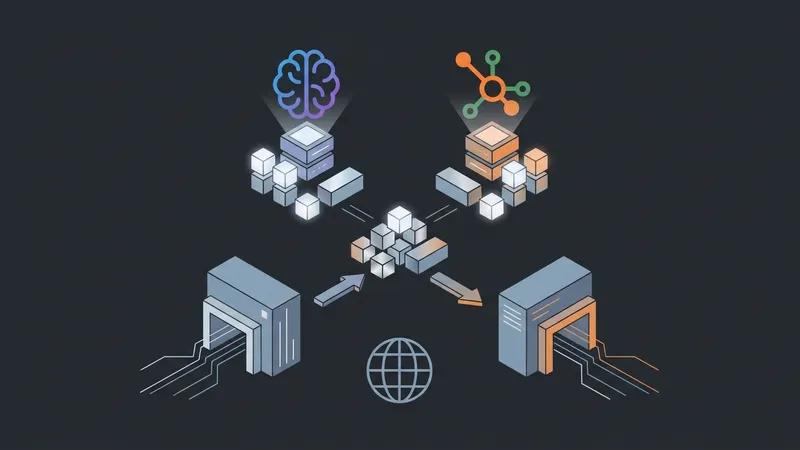
[AgentUpdate Depth Analysis] The massive adoption of Mac hardware by industry leaders like #OpenAI and Anthropic underscores a fundamental shift in AI Agent training paradigms. While massive GPU clusters remain essential for foundation model pre-training, the development of "#computer-use" Agents—which require tightly-coupled, high-frequency simulation of operating system interactions—benefits immensely from local, low-latency heterogeneous compute. Apple's unified memory architecture mitigates the high latency of discrete GPU memory buses at a fraction of the cost. This paradigm suggests the future AI Agent ecosystem will increasingly rely on a hybrid architecture: centralized heavy training augmented by highly-efficient, localized reinforcement learning nodes. For the Agent developer community, small-footprint, high-bandwidth hardware like Apple Silicon clusters is cementing itself as an indispensable local testing and training bed.