In the rapidly evolving landscape of artificial intelligence, AI coding agents are becoming indispensable tools for developers. They assist with code generation, debugging, refactoring, and even automated testing, significantly boosting development efficiency. Currently, two major contenders dominate the market: OpenAI's coding capability models (historically represented by Codex, now primarily driven by GPT-3.5 and GPT-4 series), and Anthropic's Claude Code (referring to Claude models' performance in code handling). However, determining which is superior involves much more than just benchmark scores.
Delving into their differences, performance is a primary factor. While the legacy OpenAI Codex excelled in specific programming languages and common tasks, laying the groundwork for AI code generation, its successors, the GPT-4 series, demonstrate superior capabilities in complex code understanding, multi-language support, and intricate bug diagnosis due to their powerful general intelligence and reasoning. Claude Code, on the other hand, is known for its excellent long-context understanding and deep grasp of code context. It particularly shines in handling large codebases and projects requiring high consistency, offering more precise and coherent suggestions. The optimal choice often depends on the specific task requirements.
Secondly, operational cost is a crucial consideration for both enterprises and individual developers. OpenAI's API call fees, especially for premium models like GPT-4, tend to be higher, though their efficiency in specific tasks might offset the cost. In contrast, Anthropic Claude models may offer more competitive pricing strategies in certain use cases, potentially demonstrating better cost-effectiveness for large-scale concurrent requests or long conversational interactions. Developers must assess the total cost of ownership based on actual call frequency and code complexity.
Furthermore, response speed (latency) is vital for a smooth development experience. Whether it's real-time code completion or instant debugging suggestions, an agent's response time directly impacts workflow fluidity. Both OpenAI and Anthropic continuously optimize their model inference speeds, but practical applications can vary due to network latency, model size, and specific task loads. Low-latency agents are generally preferred in fast-paced development environments.
Finally, data security and privacy are core concerns for enterprise applications. Both companies offer robust data protection measures, but their specific security protocols, data residency policies, and enterprise compliance support may differ. Anthropic notably emphasizes its "Constitutional AI" approach, aiming to ensure AI behavior is safe and explainable through a set of principles. For businesses handling sensitive code or adhering to specific industry regulations, understanding these security controls is paramount.
In conclusion, selecting the best AI coding agent is a multi-dimensional decision. Developers should consider their project's specific needs, budget constraints, tolerance for response speed, and data security requirements, rather than solely relying on benchmark figures. Conducting thorough real-world tests to find the tool that best integrates with the team's workflow is the most prudent approach.
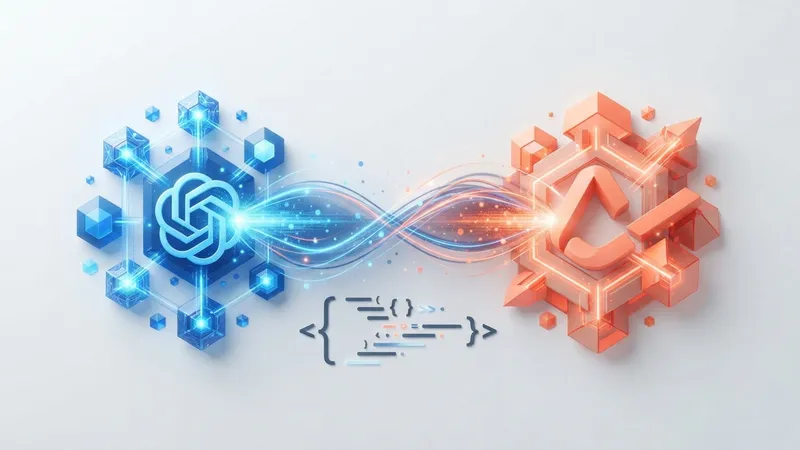
[AgentUpdate Depth Analysis] When comparing OpenAI's coding models (e.g., GPT-4) and Anthropic Claude within the AI Agent ecosystem, distinct philosophies emerge. OpenAI, with its formidable general intelligence and vast accumulated world knowledge, excels at generating diverse, innovative code and understanding complex requirements, making it a "generalist" agent. Claude, particularly its versions trained with "Constitutional AI", prioritizes safety, trustworthiness, and long-context processing, positioning it as a "specialist" or "collaborative" agent, especially for environments demanding strict code standards and enterprise compliance. For the future AI Agent ecosystem, this divergence implies the rise of hybrid agent systems. For instance, an agent might leverage GPT-4 for initial code ideation and architectural exploration, then delegate to Claude for code standardization, security review, or intricate implementation tailored to specific enterprise frameworks. This "multi-model agent collaboration" will likely become prevalent, exploiting the strengths of each model while mitigating their weaknesses. Furthermore, as agent autonomy grows, the demand for model explainability and behavioral control will intensify. Anthropic's work in this area offers invaluable insights for building safer, more controllable AI Agents, signaling that agents must not only be "capable" but also "reliable."