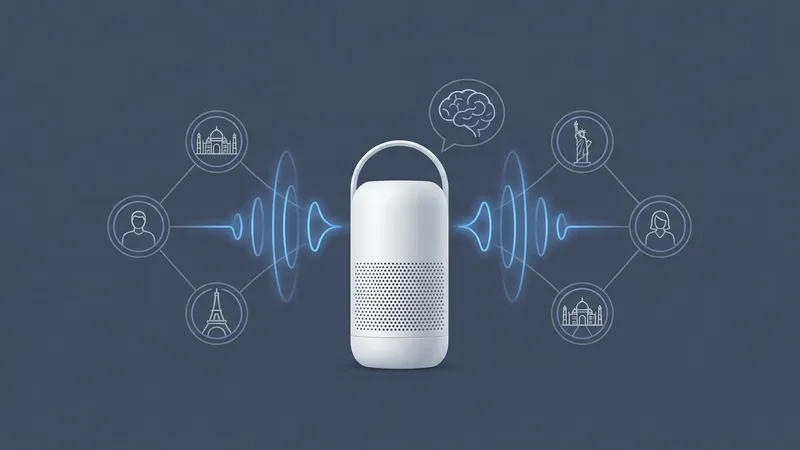
According to a Bloomberg report, OpenAI’s first foray into #hardware devices is a mobile smart speaker with integrated AI capabilities. The device, currently under development, is designed to sync with ChatGPT and provide home AI services. It features a screen-free design and is being pitched internally as a “humanlike AI companion that lives in the home.”
The device represents a significant departure from traditional smart speakers. Sources describe it as possessing a distinct “personality” and the ability to proactively learn about its owner over time, accessing digital elements like emails to deliver personalized services. Intriguingly, the speaker is designed with “mechanical elements that can move on their own,” aiming to become a physical manifestation of ChatGPT.
To build this hardware, #OpenAI recruited several former Apple engineers who were instrumental in creating iconic products like the iPhone and Mac. However, this launch comes amid legal turmoil. Last week, Apple sued OpenAI, accusing the startup of stealing trade secrets—a claim Apple says is just the “tip of the iceberg.” OpenAI has denied any wrongdoing, asserting that its device veers significantly from anything Apple currently offers.
OpenAI's hardware push arrives during a massive wave of excitement surrounding consumer AI hardware. For instance, Hark, an AI lab founded by Brett Adcock, raised a $700 million Series A at a $6 billion valuation in May to build its own "personal intelligence" hardware interface, demonstrating the massive capital flowing into this sector.
[AgentUpdate Depth Analysis] OpenAI's venture into a screenless, mobile speaker marks a critical transition for AI Agents from purely digital assistants to Embodied AI Agents. While previous consumer AI gadgets like Rabbit R1 or Humane AI Pin struggled by targeting mobile, on-the-go scenarios, OpenAI’s focus on the static, context-rich home environment is highly strategic. A moving physical entity with proactive learning capabilities can leverage multi-modal context—such as user routines and digital logs—more naturally than a static smart speaker. This device positions ChatGPT not just as a chatbot, but as an active home manager and companion, raising the bar for the entire Agent ecosystem. By shifting from reactive software to proactive, embodied hardware, OpenAI is paving the way for the next era of human-agent interaction, redefining how physical interfaces act as the primary touchpoint for LLMs.