The open-source AI Agent project OpenSquilla has officially released version 0.4.0. The cornerstone of this major update is the launch of its new Coding mode, introducing a pioneering "self-verification" mechanism for AI-assisted programming. Instead of simply delivering unchecked code, the AI now runs automated tests to produce verifiable proof of correctness before handing off the results.
This mechanism directly addresses the critical bottleneck of "trust" in modern AI Coding. While AI code generation capabilities have surged, "capable" does not mean "trustworthy". Most existing coding agents employ a "generate and deliver" flow, leaving engineers to manually verify every line. This has been a major hurdle for deploying autonomous AI in production environments. By embedding the validation within the Agent itself, #OpenSquilla shifts the paradigm from "claimed correctness" to "proven correctness."
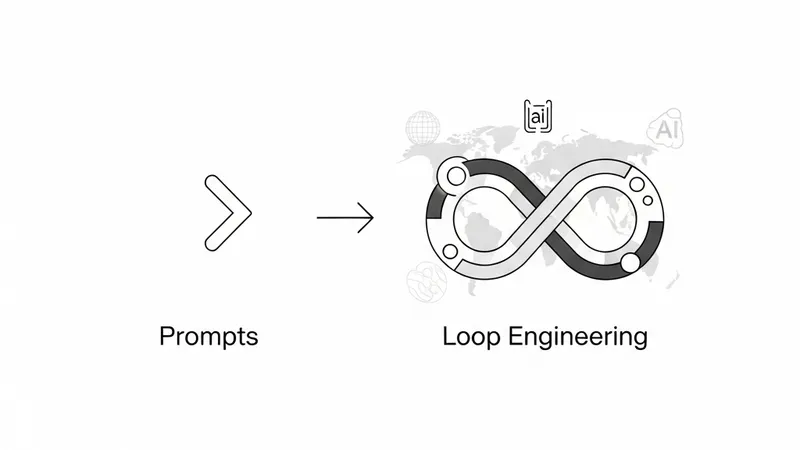
Practically, this is achieved through a "Red-Green-Regression" testing pipeline. The Agent first writes a failing test (Red) to isolate the bug, then implements the code to make it pass (Green), and finally runs existing project tests to prevent regression. All checks must pass for a successful delivery; otherwise, an automated repair loop triggers within an isolated workspace until all tests pass.
In an official demo, the Coding mode successfully implemented a correct gradient calculation feature for micrograd, the minimalist autograd engine created by Anthropic researcher Andrej Karpathy. Gradient errors are notoriously silent and hard to spot manually. By following OpenSquilla's self-verification pipeline, the generated gradients matched the industry standard PyTorch up to 10 decimal places. This marks their latest runtime implementation following the release of the claw-swe-bench benchmark.
Concurrently, OpenSquilla released its first signed and notarized desktop installers for macOS and Windows for effortless setup. Built on the Learnable Harness framework, OpenSquilla focuses on optimizing intelligence per unit cost. Through local intelligent routing, on-demand memory retrieval, and pre-processing, it slashes comprehensive token costs by 60%–80%. Its routing accuracy outperforms OpenRouter by 4.4% while being 75% cheaper.
[AgentUpdate Depth Analysis] The introduction of the "self-verification" red-green testing loop in OpenSquilla 0.4.0 represents a pivotal milestone in the evolution of Coding Agents. By moving beyond raw generative output and embracing the principles of Test-Driven Development (TDD), OpenSquilla effectively decouples and reconstructs the LLM generation phase and the runtime execution phase. This closed-loop self-correction within isolated environments essentially equips the AI Agent with an integrated "quality assurance" system. Compared horizontally to platforms like Devin or Swe-agent, OpenSquilla's Learnable Harness architecture successfully tackles the critical barrier of soaring inference costs. In the long run, this dual-engine approach of "high reliability" and "cost efficiency" will accelerate the transition of AI Agents from simple completion autocomplete widgets to autonomous, production-grade software engineering agents, setting a benchmark for self-supervised evolutionary architectures in the broader Agent ecosystem.