Following an outstanding fiscal quarter, Palantir CEO Alex Karp issued a stark warning that frontier AI labs are fundamentally untrustworthy for enterprises. In his quarterly shareholder letter, the philosophy PhD holder implied that these AI capitalists are giving rise to a modern form of Marxist exploitation. Powered by skyrocketing enterprise AI adoption, #Palantir achieved record-breaking Q2 results, reporting $1.9 billion in revenue (up 93% year-over-year) and $1.1 billion in net profit—a milestone where single-quarter profit surpassed the entire revenue of the same period last year.
“There are Marxist overtones and undertones to our business,” Karp wrote. “Others, including many of those building large language models, intend, knowingly or otherwise, to capture the means of production of their purported partners.” During the analyst call, he lambasted companies purchasing API tokens as engaging in expensive 'token self-pleasurings.' He warned: “You are paying for the right for them to migrate your IP, your know-how, and your expertise to their model, so that they can build a competitive business that doesn’t require your business or people.”
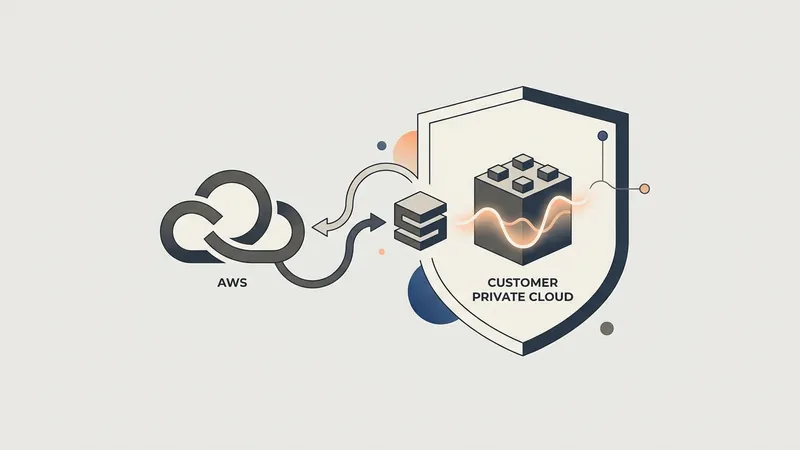
In contrast, Palantir positions its Palantir AIP as a model-agnostic enterprise AI and analytics platform. This architecture allows organizations to retain absolute control over their proprietary data, security, and 'AI exhaust'—including prompts, orchestration, and context. This critique aligns with growing industry anxieties, echoed by leaders like Microsoft CEO Satya Nadella, as enterprises watch AI partners like OpenAI and Anthropic launch competing vertical solutions in healthcare, legal, and operational software.
[AgentUpdate Depth Analysis] As AI Agents transition from simple wrappers to complex enterprise workflows, the battle for data sovereignty between foundation models and applications is intensifying. Karp's 'means of production' analogy highlights a critical vulnerability: utilizing LLMs purely via standard APIs risks exposing proprietary corporate intelligence to passive distillation by model vendors. In the emerging AI Agent ecosystem, competitive advantage lies not in raw #LLM parameters, but in the proprietary orchestration layer, private knowledge graphs, and tool-use contexts. Palantir's strategic success with AIP underscores that the future of enterprise Agents must be model-agnostic. To mitigate intellectual property colonization, enterprises must separate the reasoning engine (LLM) from the agency execution layer, treating models as commoditized utilities while retaining strict custody over the #orchestration, context, and Agent architectures.