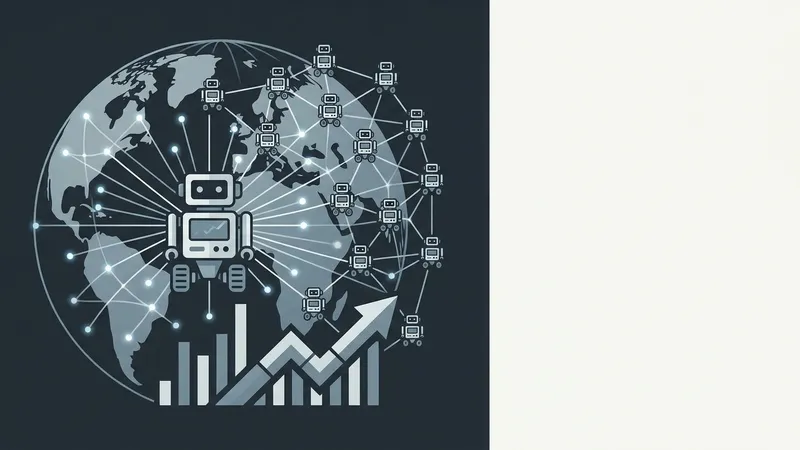
The Embodied AI industry is entering a pragmatism-driven phase. According to a research report by Frost & Sullivan, Pudu Robotics now ranks first globally in terms of commercial service robot revenue, shipments, and export volume, with over 130,000 units deployed in 85 countries and regions.
This massive active fleet serves as a powerful data engine. Pudu currently generates 36.5 million hours of navigation data and 15.8 million hours of manipulation data annually. To solve the data scarcity dilemma, the company employs a virtual-real closed loop mechanism. This method leverages a World Simulator for scale training, and refines it using Human-in-the-Loop real-world feedback to ensure safety and precision.
To overcome the inefficient "one model, one robot" paradigm, Pudu introduced PuduFM, its proprietary embodied large model driving the "One Brain, Multiple Forms" strategy. #PuduFM serves as the common physical brain for heterogeneous robots, such as the humanoid-like robot D7, allowing them to generalize physical experiences across tasks.
At the core of PuduFM is PIM (Physical Intuition Model). Utilizing a causal-attention Transformer architecture, PIM infers physical parameters like gravity, friction, and deformation in the latent space. It forecasts physical feedback before actions occur, equipping the robot with intuitive physics to prevent slips and collisions.
[AgentUpdate Depth Analysis] Pudu’s "One Brain, Multiple Forms" framework and PuduFM represent a critical milestone in transitioning AI Agents from the digital realm to the physical world. While traditional software Agents remain constrained by digital screens, embodied Agents utilizing Physical Intuition Models (PIM) bridge the gap between cognitive reasoning and physical action. By combining LLM-based task planning with real-time physical safety limits, these systems lay the groundwork for highly versatile multi-modal physical Agents. This evolutionary shift means future AI Agents will not only think and generate text but dynamically interact with and manipulate complex, unstructured human environments, fundamentally accelerating the next phase of the Agent ecosystem.