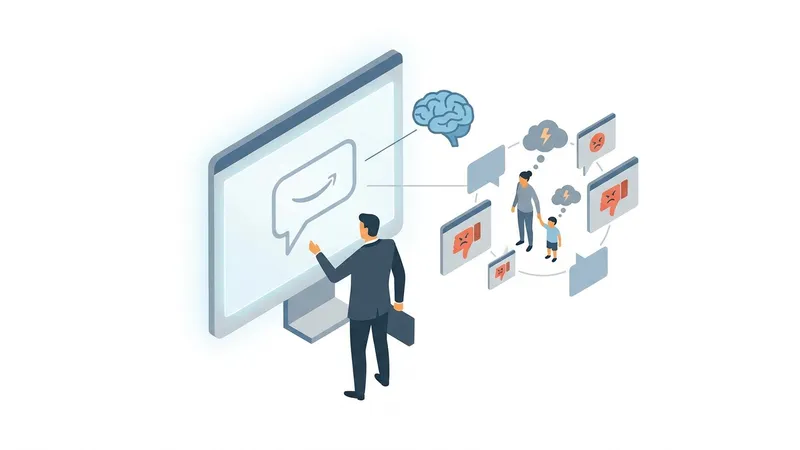
OpenAI’s co-founder and CEO, Sam Altman, faced severe backlash on social media after presenting what he believed was a revolutionary ChatGPT parenting use case. Altman suggested feeding the family's schedule and children's interests into #ChatGPT to auto-generate a daily "personalized family podcast" during the morning school run. What he envisioned as a seamless integration of AI assistant technology into daily life was quickly criticized as cold and disconnected.
The sharpest critique came from Alex Hirsch, creator of the Disney series *Gravity Falls*, who replied: "Or you could just talk to your kids." Hirsch’s response amassed over 202,000 likes, outperforming Altman’s original post by 18-fold. Public outrage focused not on using AI for scheduling, but on delegating parental emotional presence—specifically, letting an algorithm decide what topics to discuss with children and transforming organic family bonding into synthetically produced audio.
This is not the first time Altman has endorsed "AI parenting." He previously shared that he relies heavily on ChatGPT to answer late-night development questions about his son, describing it during an appearance on *The Tonight Show* as an essential tool for navigating early fatherhood. However, this latest "family podcast" concept shattered his gentle fatherhood persona, revealing his priority as an OpenAI business strategist pushing the commercial boundaries of conversational AI into personal and sacred family spaces.
Behind this controversy lies #OpenAI's clear ambition to dominate the household market. According to TechCrunch, OpenAI recently posted job listings for a Product Manager for Family Products. Market research from Sensor Tower indicates that ChatGPT’s user demographic is shifting older, with users aged 35 and above rising to 31% globally. Moreover, 24% of smartphone-using parents in the US now utilize ChatGPT, indicating its transition from a personal productivity tool to a central household coordinator.
Yet, deploying AI in a domestic setting is exponentially more sensitive than in an office environment. While an enterprise AI error might corrupt a spreadsheet, errors in a household AI can deeply impact children's developmental psychology and trust. OpenAI already faces lawsuits regarding ChatGPT's alleged role in negative mental health outcomes. Furthermore, harvesting highly intimate family data—ranging from school activities to personal emotional dynamics—presents massive privacy and data security vulnerabilities that current safety guardrails are unequipped to guarantee.
[AgentUpdate Depth Analysis] From the evolutionary trajectory of AI Agents, Altman's "family podcast" concept underscores a pivotal shift from single-user productivity tools to multi-agent collaborative home environments. Tech giants and developers are increasingly looking at frameworks like Microsoft Copilot and open-source agent ecosystems to enter the smart home. However, the domestic sphere represents a highly unstructured environment defined by deep emotional resonance and extreme #privacy requirements. The bottleneck for family-oriented AI Agents is not just a technical challenge of multimodal perception or long-term episodic memory; it is a profound ethical boundary. To foster a sustainable AI Agent ecosystem, developers must implement "non-invasive" design principles. Agents should act as silent orchestrators behind the scenes—handling mundane scheduling and reducing cognitive overload—thereby liberating human attention so that genuine, unscripted interpersonal connections can thrive, rather than replacing them with algorithmic proxies.