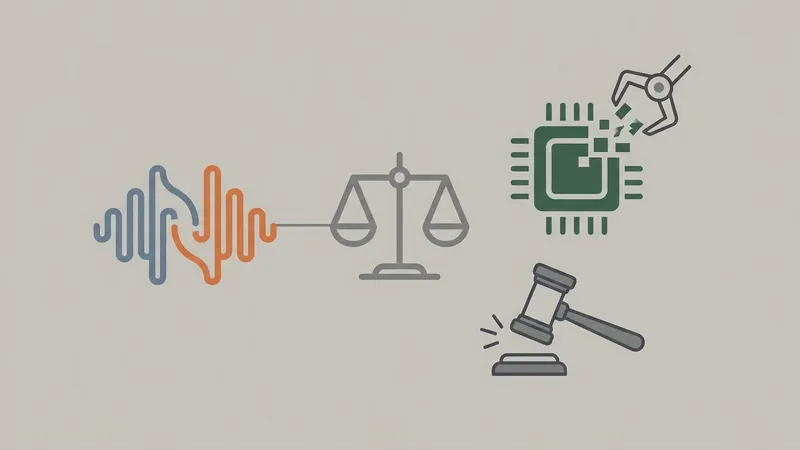
Sony Music Publishing and Warner Chappell Music filed a lawsuit against generative AI unicorn Anthropic in a Northern California district court on Friday, intensifying the legal battle over AI training data.
The complaint also directly names #Anthropic cofounders Dario Amodei and Benjamin Mann as defendants. The publishers accused them of conducting a 'brazen campaign' of illegally torrenting, scraping, and downloading copyrighted works on a massive scale to develop, operate, and reap enormous profits from Anthropic's Claude series of AI models.
According to the filing, Anthropic collected 'thousands upon thousands' of copyrighted songs, ranging from the iconic 80s anthem 'Eye of the Tiger' and Marvin Gaye's 'Ain't No Mountain High Enough' to tracks by Mariah Carey. The music publishers are seeking statutory damages of up to $150,000 per infringed song.
Anthropic swiftly denied the accusations in an official statement, stating, 'We disagree with the publishers' claims and we intend to defend ourselves robustly in court.' The case joins a growing list of high-profile #copyright lawsuits targeting the training data practices of leading AI companies.
[AgentUpdate Depth Analysis] This lawsuit marks a critical expansion of AI copyright disputes into highly structured creative fields like music lyrics, presenting a major strategic warning for the AI Agent ecosystem. Advanced Agents rely heavily on Retrieval-Augmented Generation (RAG) and tool-calling to fetch, process, and synthesize real-time and copyrighted external data. If foundational models like Claude are legally compelled to perform 'machine unlearning' or face heavy licensing fees, the capability of down-stream Agents in content generation and media analytics will be severely bottlenecked. To build resilient Agent networks, developers must shift from raw scraping to standardized data-sharing protocols (such as MCP) and structured licensing frameworks. Data compliance is no longer just a legal issue but a foundational architectural requirement for next-generation autonomous Agents.