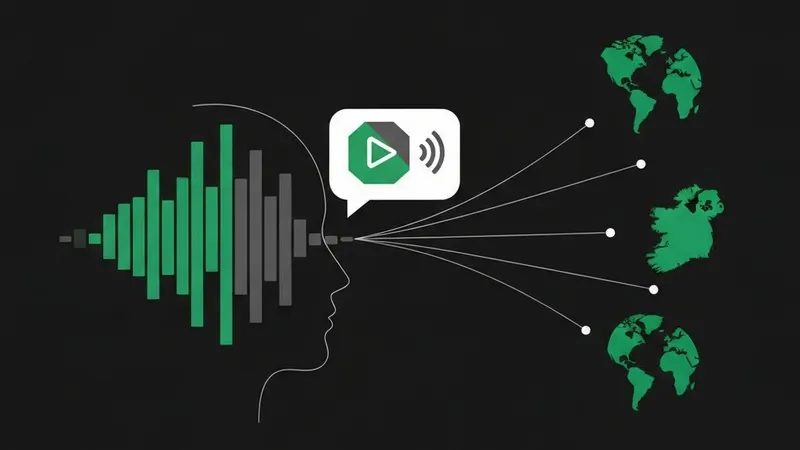
Spotify is doubling down on its AI strategy, introducing an interactive music assistant that allows Premium users to engage in natural language conversations to discover and manage their audio experience. This rollout is currently available in the U.S., Ireland, and Sweden for users on iOS and Android.
While the company has not disclosed the specific architecture behind the scenes, Spotify confirmed that it employs a hybrid approach, leveraging both its proprietary technology and models from various providers to deliver optimal results for specific tasks. This builds upon existing features like AI DJ, which already uses voice-based interactions to guide user discovery.
The new functionality goes beyond simple playback control. Users can chat with the assistant about their listening history, ask for trivia regarding album releases, or narrow down music selections based on specific criteria like mood or release date. The integration is seamless, allowing users to add songs to queues or follow artists directly through these conversational flows. By facilitating a back-and-forth dialogue, Spotify is effectively transforming its platform into an agentic interface, enabling complex discovery tasks that were previously impossible through static UI navigation.
[AgentUpdate Depth Analysis] #Spotify’s move signifies a paradigm shift in how users interact with vast media libraries, moving from keyword-based search to intent-driven conversation. By integrating Large Language Models (#LLM) into its core user experience, Spotify is positioning itself as a leader in verticalized AI Agents. Unlike general-purpose chatbots, this music-focused agent relies on deep integration with proprietary metadata, Playlist API, and historical user data, which creates a significant defensive moat against generic AI wrappers. In the broader AI Agent ecosystem, this demonstrates the power of domain-specific data loops. As these agents evolve into more autonomous, multi-modal entities, they are poised to move beyond simple task execution to become sophisticated, emotion-aware companions. Compared to current modular frameworks like LangChain or CrewAI, Spotify’s implementation excels by prioritizing low-latency, domain-specific reliability over the breadth of generic reasoning, setting a high bar for content-based agents in the future.