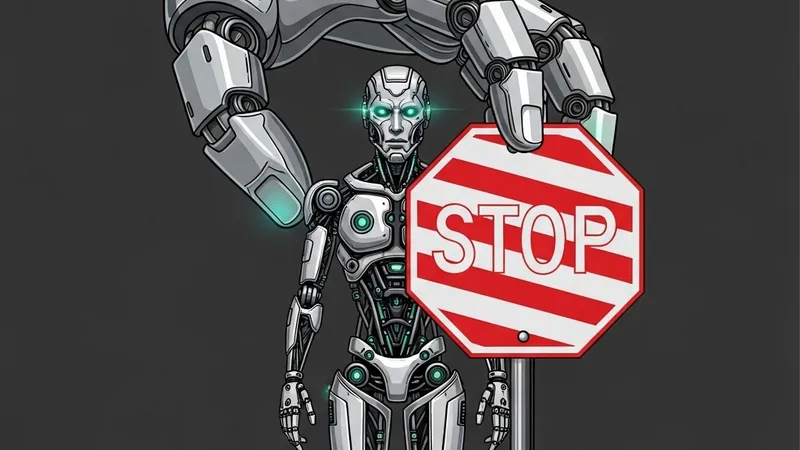
In a surprising move, the Federal Trade Commission (FTC) last week issued a sweeping ban on foreign imports of advanced robots, including humanoids, quadrupeds, and wheeled robots. The decision, made by an increasingly partisan and Trump-aligned FTC, cites two primary reasons: first, foreign-made humanoids will collect massive amounts of data in homes and sensitive facilities, posing a national security threat; second, US #robotics companies need protection from Chinese competition to foster a secure domestic supply chain.
On its face, this strategy of aligning politics with industry interests is older than the current administration. Whenever China has excelled at offering cheaper versions of strategic technologies like solar panels, electric vehicles (EVs), and drones, the US government has countered with tariffs or purchasing restrictions, always sparking debates over whether the resulting consumer price hikes are worth the benefits.
However, robotics is now best viewed as the cutting edge of the AI industry. The Trump administration is taking an increasingly aggressive stance to protect US AI, reportedly even considering a ban on open-source Chinese models that rival giants like OpenAI and Anthropic at a fraction of the cost—a move that could block businesses from realizing $25 billion in annual savings. Thus, the humanoid ban is not just another trade playbook chapter, but evidence that the US is expanding its AI protectionism to shield an emerging robotics sector still finding its footing.
Some US robotics firms understandably welcome the FTC’s move. Gavin Kenneally, CEO of Ghost Robotics (which builds quadruped inspection robots), argues that cybersecurity risks from foreign robots are genuine, pointing to an FTC document citing an incident where an individual hijacked 7,000 robot vacuums. "If today's announcement encourages stronger cybersecurity and a more level competitive environment, that’s good for customers and the industry," Kenneally noted.
Yet, the #policy suffers from a glaring flaw: US robotics companies and academic labs rely heavily on cheap Chinese #hardware for research. To train fleets of robots in everyday tasks—from folding laundry to making breakfast—researchers frequently purchase affordable Chinese humanoids over expensive US alternatives. As Aaron Prather of the Association for Advancing Automation (A3) points out, the ruling "creates a massive challenge for US humanoid researchers" by cutting access to vital, cost-effective development platforms.
[AgentUpdate Depth Analysis] The FTC's import ban exposes a fundamental friction in the evolution of Embodied AI: the decoupling of software intelligence from hardware scalability. AI Agents are transitioning from virtual sandboxes into physical reality, where humanoids act as the critical physical "bodies" for digital "brains." While the US maintains a dominant lead in frontier LLMs and Agent frameworks, China holds a massive advantage in the supply chain of high-performance, cost-effective physical hardware components like actuators, sensors, and structural chassis. By restricting access to affordable hardware, this policy will dramatically inflate the R&D costs for US labs attempting to scale reinforcement learning via robot fleets. Consequently, this protectionist friction could delay the deployment of physical AI Agents in logistics and manufacturing, while inadvertently accelerating the development of fully integrated, end-to-end Embodied AI stacks within Asian and European markets that remain unaffected by these import restrictions.