Last week's US #midterms may not have cowed Donald Trump, but they should serve as a wake-up call for the grinning tech broligarchs who lined up at his inauguration two chaotic years ago. Clearly, the cost-of-living squeeze unleashed by Trump's war in Iran was a big driver of the Democrat wave. But AI was also on the ballot – in many places, literally.
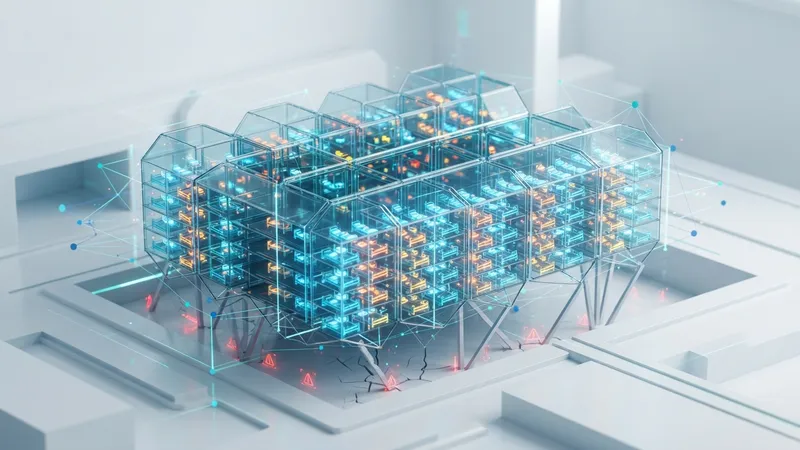
Dozens of measures calling for limits on datacentre expansion were passed. Elsewhere, reining in the unchecked expansion of power-hungry mega-sheds became a rallying cry. At a campaign event, Texas senator-elect James Talarico recalled meeting a mother who told him the lights from the neighbouring #datacentre were so bright her son thought it was daytime in the middle of the night.
Whether the tech sell-off resumes this week remains to be seen, but the anti-AI sentiment evident in last week's results appears to have punctured at least one narrative sustaining the market boom. Every bubble needs a story, and for AI one chapter involves carpeting the US in debt-funded datacentres, which will become necessary – and viable – as demand for the technology increases.
That looks a lot less feasible after last week. It turns out that chucking up hundreds of these humming warehouses while simultaneously warning workers they may be superseded by an army of superhuman bots is not great PR. The public were meant to set aside their qualms for the greater good AI would bring the economy. But the positive benefits many derive from chatbots – the shopfront of AI for most of us – coexist with very obvious downsides.
Just to name a few: the sea of online slop; those pervert glasses; and tech firms' insistence on shoehorning the technology unbidden into every app, platform and device – the latest example of what tech writer Cory Doctorow calls 'enshittification'. At the same time, voters have watched the leaders of big tech firms become obscenely rich while average consumers continue to be hammered by inflation. So perhaps it should not be surprising that the US electorate seems to have decided: enough.
Ultimately, all businesses in a democracy – even those embraced by the US president – have to operate within the bounds set by society. And the tech bros have done a terrible job of winning over the public. Elon Musk's approach in Texas, where he poured billions into trying to buy the electorate, just became a selling point for the Democrats.
It remains to be seen whether objections to datacentres are the start of a more radical shift in opinion that will eventually tame tech companies, redolent of when Teddy Roosevelt swept into the White House at the turn of the 20th century to break up the oil and railway monopolies. At the very least, however, the opposition seems likely to put the brakes on the hectic pace of investment in building out AI's physical #infrastructure.
[AgentUpdate Depth Analysis] The midterm results carry implications for the AI Agent ecosystem that go far beyond surface politics. Datacentres are the utilities of the Agent era – without massive compute, there are no Agent clusters capable of executing complex tasks in parallel. But the voter backlash exposes a fundamental tension: the efficiency narrative of AI Agents is colliding head-on with ordinary people's survival anxiety. Horizontally, the Agent capability race at labs like OpenAI and Anthropic depends on hyperscale training clusters, while the deployment of frameworks like CrewAI and LangChain depends on inference-side compute proliferation. If electoral politics puts the brakes on infrastructure investment, the transition of Agents from demo to production could be forced to slow. More critically, this marks the beginning of the end for the 'technology first, society pays later' model. The future winners in the Agent ecosystem may not be those with the most compute, but those who solve the social licence problem first – for instance, using Agents to reduce datacentre energy consumption, or to create local jobs rather than displace them. For Agent developers, compliance and community relations will no longer be peripheral issues but core variables in product design.