Users occasionally encounter system alerts indicating "unusual activity detected from your computer network," often followed by a CAPTCHA verification challenge to confirm they are not an automated program. This mechanism is a common measure adopted by websites to maintain security and prevent abuse, aiming to distinguish legitimate users from potential automated scripts or malicious activities.
Such warnings typically signify that the website's defense systems have identified patterns potentially associated with automated scripts, crawlers, or distributed denial-of-service attacks. Users are prompted to verify their identity by clicking a box. If users are unable to proceed, it often indicates that their browser does not support JavaScript or that cookies are disabled or blocked from loading. Users should ensure their browser functions correctly and can consult the website's Terms of Service and Cookie Policy for further information.
For users persistently experiencing access issues, websites usually provide a channel to contact their support team, requesting a unique Block Reference ID (e.g., 1cdc7ad9-8e12-11f1-87a1-039a5875fadf) for troubleshooting. This ID helps technical personnel quickly locate and resolve the problem, ensuring legitimate users' access rights.
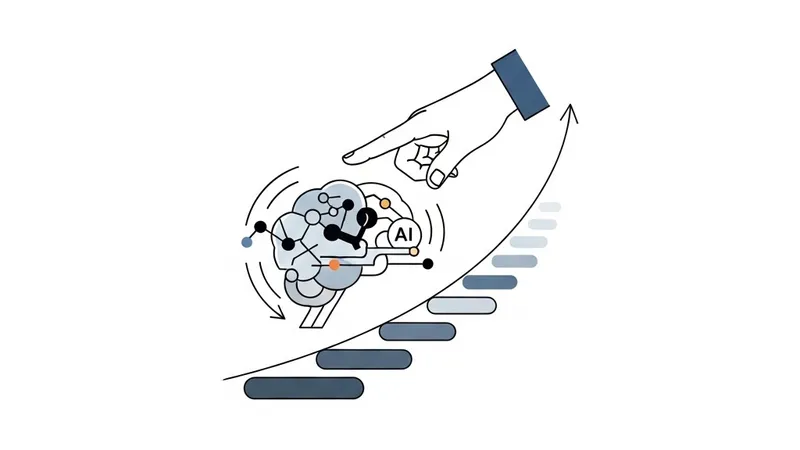
[AgentUpdate Depth Analysis] The phenomenon of network anomaly detection is deeply intertwined with the evolution of the AI Agent ecosystem. As Large Language Models (LLMs) and autonomous agent technologies advance, one primary challenge for #AI Agents performing web tasks is bypassing these intelligent verification systems. While traditional scrapers might use simple IP rotation or User-Agent spoofing, modern detection systems like Akamai Bot Manager and Cloudflare Bot Management have evolved to incorporate behavioral analysis, fingerprinting, and even machine learning models to identify non-human mouse movements, click frequencies, and page interaction patterns. For AI Agents to achieve advanced task automation, such as data scraping, online transactions, or social media management, they must master sophisticated human behavior simulation techniques. This includes mimicking natural browsing speeds, random page dwell times, and, when necessary, solving image CAPTCHAs through computer vision. Unlike mere Selenium/Puppeteer scripts, advanced agents require a dynamic decision-making layer to adapt their web behavior in real-time to evade detection. Moving forward, the arms race between AI Agents and web security systems will intensify, leading to the development of more intelligent and stealthy agents, while also pushing web defense technologies towards more multimodal, biometric, and predictive approaches—a continuously evolving game of cat and mouse.