The AI office productivity suite market has entered an era of consolidation. ByteDance integrated Coze and Trae into its Doubao ecosystem, Alibaba launched "Qwen Office," and Tencent consolidated its QClaw team to build WorkBuddy into a leading AI-native desktop office agent. The industry's competitive focus has shifted from answering queries to executing complex actions.
Globally, cutting-edge AI research is focusing heavily on autonomy and self-improvement. Anthropic recently detailed the path of Recursive Self-Improvement (RSI), emphasizing a trajectory toward autonomous Agents and closed-loop evolution. Concurrently, academic and industry players, including DeepMind, are accelerating self-evolving agents like AREX to achieve continuous optimization.
Meanwhile, AI penetration in cross-border commerce is accelerating. Alibaba International launched its full-link AI agent, Accio Work, which handles over 1 billion daily API calls. Amazon redesigned its recommendation logic with Rufus, and Salesforce rolled out Agentforce to embed AI agents into B2B operations. The industry consensus is clear: general agents provide breadth, but vertical integration determines commercial depth.
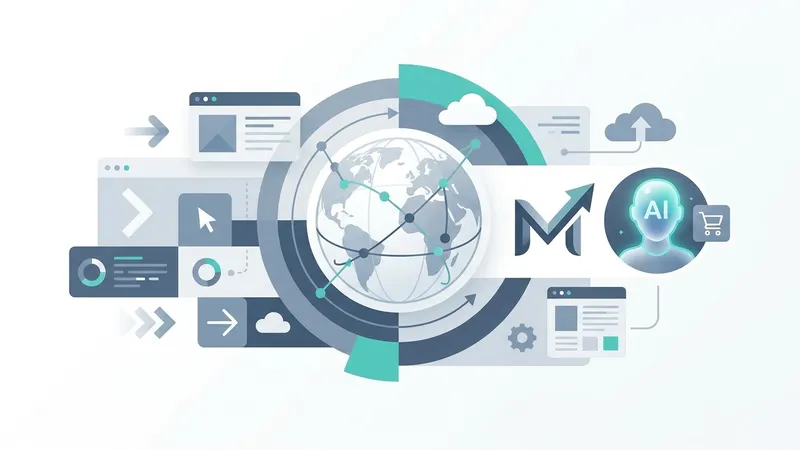
Against this backdrop, Meorient officially launched "Xiaoyuan AI" at the 5th Global Digital Trade Expo. Tailored for Chinese export enterprises, Xiaoyuan AI is a native outbound business agent powered by Meorient's 30 years of global trade experience, 10 million global buyer profiles, and millions of real trade inquiries.
Xiaoyuan AI's framework consists of "five tasks, three values, and four intelligences." It covers market insights, buyer analysis, customer tracking, content marketing, and exhibition planning. This integration creates a closed loop of discovery, trust-building, transactions, and operations, gradually converting daily communications and negotiation records into reusable digital assets for enterprises.
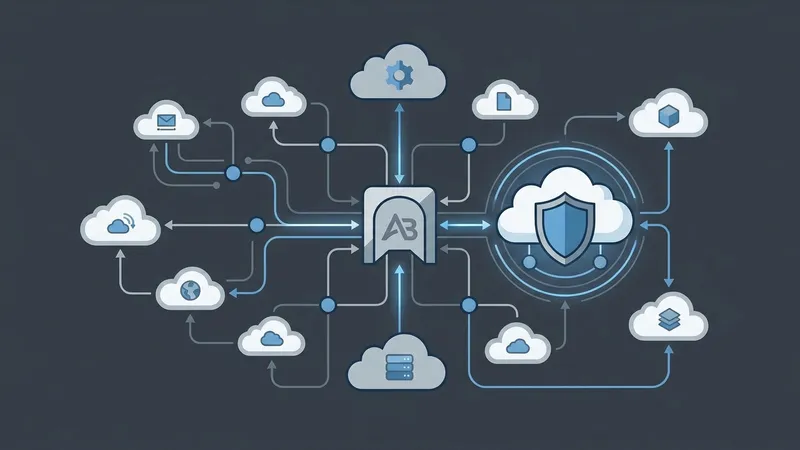
Strategically, Xiaoyuan AI chose an ecosystem-led approach by launching on Tencent #WorkBuddy. Leveraging the new MCP (Model Context Protocol), users can seamlessly invoke Xiaoyuan AI's specialized trade capabilities—such as buyer matching and cold email generation—directly within their WorkBuddy workspace, avoiding tedious platform switching.
Operating on a transparent "recharge + token consumption" model, Xiaoyuan AI lowers the entry barrier for small and medium-sized enterprises. As AI evolves from simple productivity assistants to autonomous business operators, the second half of the outbound AI wave will be defined by operational intelligence and asset accumulation.
[AgentUpdate Depth Analysis] The integration of Xiaoyuan AI into Tencent WorkBuddy via MCP represents a major shift toward interoperability in the AI Agent ecosystem. While tech giants dominate broad user entry points, vertical startups hold the proprietary data and specialized workflows crucial for business operations. #MCP acts as the bridge, allowing domain-specific micro-agents to easily plug into enterprise workspaces. In the future, the Agent ecosystem will likely not be dominated by a single monolithic app, but rather thrive as a decentralized network where versatile host platforms cooperate with specialized agents. This "Portal-as-a-Service" model significantly accelerates AI adoption across traditional industries by delivering highly contextualized business outcomes.