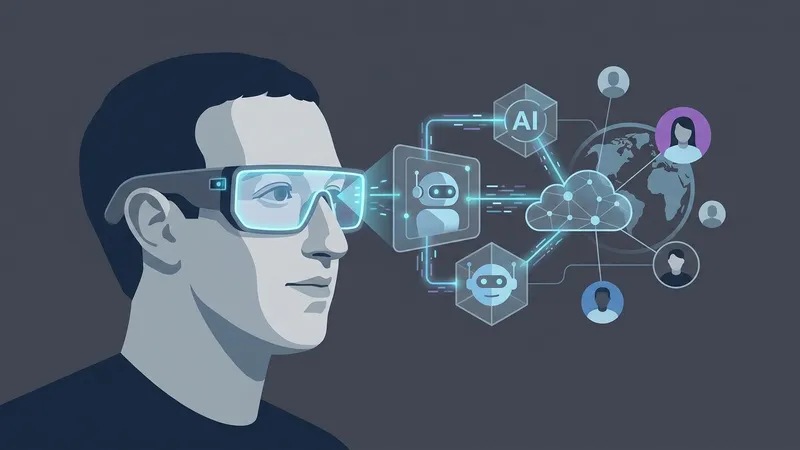
Recently, Meta CEO Mark Zuckerberg reiterated his grand vision for artificial intelligence alongside the release of the company's latest open-weight model. Zuckerberg claimed, "Everyone will have an exceptionally capable personal agent that understands you, your goals, and everything you care about. You’ll be able to interact with your agent through any device, including your glasses."
However, this Silicon Valley utopian vision has sparked skepticism and debate among the public. In a letter published by The Guardian, reader Peter Wallis offered a sharp, satirical retort to the tech billionaire's ambition, writing that Zuckerberg is "wasting his time, as we already have one – it’s called 'your brain'."
This exchange highlights a broader cultural and philosophical tension surrounding the rise of autonomous agents. As tech giants push for ubiquitous AI Agent integration via hardware like smart glasses, questions about human agency and the preservation of our own cognitive faculties are coming to the forefront. The clash between biological intelligence and silicon-based agents continues to redefine the boundaries of tech adoption.
[AgentUpdate Depth Analysis] Zuckerberg's vision of anchoring AI Agents to wearable hardware, such as smart glasses, represents a fundamental shift in human-computer interaction. However, the satirical reminder that "we already have a brain" highlights a critical tension: Is AI an extension of human capability or a substitute for cognition? Unlike OpenAI's closed-source subscription model, #Meta's open-weight approach with Llama democratizes on-device Agent deployment. The real challenge, however, lies in aligning Agent autonomy with human intent. Future AI Agents will not replace human biological intelligence but will serve as an "exocortex"—a collaborative cognitive layer that extends human perception. This evolution will redefine the Agent ecosystem from standalone assistants to deeply integrated, symbiotic cognitive partners.