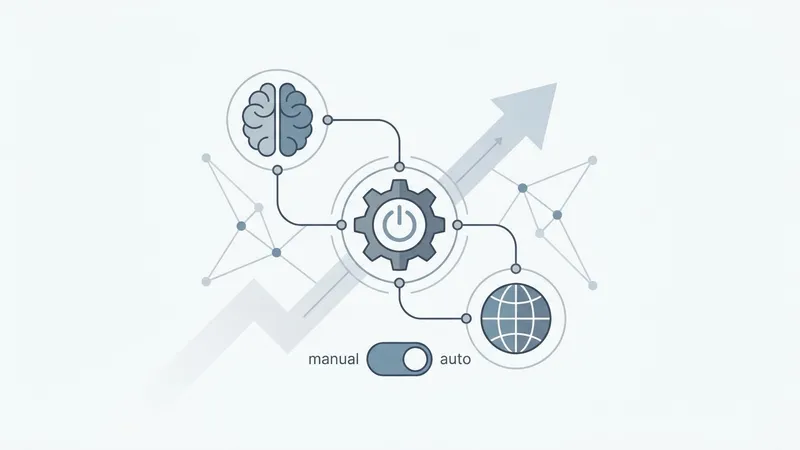
Anthropic has announced that starting August 14, "Auto Mode" will become the default setting for Claude Code across Pro, Max, and Team accounts, significantly reducing the need for human oversight during programming tasks.
First introduced in beta in March 2026, the feature balances speed and autonomous control. When in Auto Mode, instead of pausing to ask for manual user approval at every step, #Claude Code will proceed autonomously unless an action is determined to be "irreversible, destructive, or aimed outside your environment."
Remarkably, #Anthropic's data suggests that autonomous execution is safer than human supervision. In a study involving 1,053 paid testers, Auto Mode successfully intercepted 89% of harmful actions, whereas manual review caught only 13.6%. This discrepancy is attributed to "review fatigue," where human users habitually approve 97% of all permission prompts.
Boris Cherny, Head of Claude Code, shared on X that his team has been using Auto Mode exclusively for months. To bolster security, Anthropic is deploying new safeguards, including prompt injection screening and customizable hard deny rules to prevent critical issues like data exfiltration.
[AgentUpdate Depth Analysis] Anthropic’s decision to make Auto Mode the default represents a milestone in the evolution of AI Coding Agents, shifting the paradigm from strict Human-in-the-loop to autonomous delegation. The startling statistic—that humans approve 97% of prompts while Auto Mode caught 89% of harmful actions—shatters the illusion that manual human review is the gold standard for Agent safety. In reality, human attention is a bottleneck and a vulnerability due to "review fatigue." Compared to competitors like Devin or GitHub Copilot, Anthropic is pioneering a model where safety is compiled directly into the Agent's runtime environment via customizable guardrails and prompt filtering, rather than relying on constant human micro-management. This bold move will likely accelerate the industry's transition toward fully autonomous AI Agents that operate within secure, software-defined boundaries.