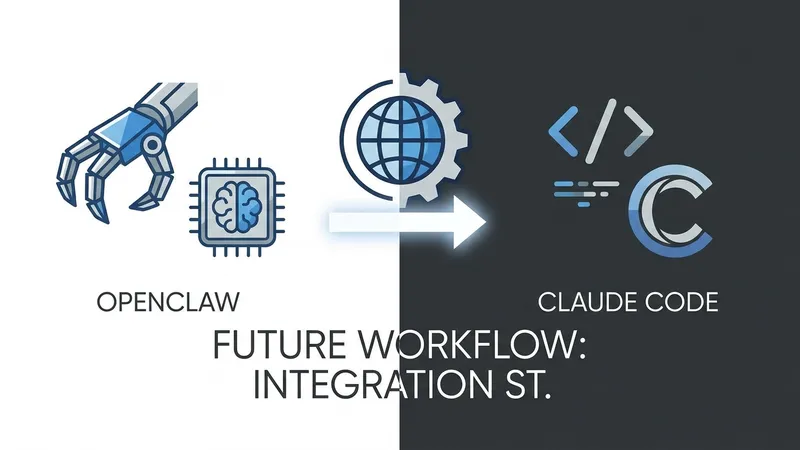
Nemp Memory is a smart memory plugin designed for AI agents like Claude Code and OpenClaw. It solves the problem of agents forgetting context between sessions by providing automated project environment learning and memory management through simple commands. Key features include 100% local operation, no cloud services, API keys, or complex databases, ensuring privacy with all data stored in plain JSON files. Nemp Memory offers smart context search, AI-powered memory suggestions, and two-way auto-sync with CLAUDE.md, significantly streamlining developer workflows and ensuring agents always have up-to-date and accurate project context.
Claude Code Usage Monitor is a real-time terminal monitoring tool developed by Maciek-roboblog, specifically designed for tracking Claude AI's token usage. It offers advanced analytics, machine learning-based predictions, and a rich user interface to help users monitor token consumption, burn rates, and cost analysis in real-time, while providing intelligent forecasts for session limits. The tool supports automatic detection of various Claude plans and custom limits, along with a multi-level warning system to prevent users from accidentally exceeding their usage quotas.
cmux is a Ghostty-based macOS terminal designed for AI coding agents. It enhances developer interaction with AI agents by integrating vertical tabs, smart notification systems, and a built-in browser. cmux addresses the challenges of context switching and notification overload in multi-agent parallel workflows, offering tailored features like agent notification rings, a consolidated notification panel, and a scriptable in-app browser. Built as a native macOS application, it ensures fast startup and low memory usage, supporting advanced functionalities like SSH workspaces and Claude Code Teams.
Oh-my-mermaid (omm) is an AI-powered architecture documentation generation tool designed to bridge the gap between AI-written code and human understanding. It analyzes codebases to generate various 'perspectives' (e.g., structure, data flow, integrations), each containing a Mermaid diagram and detailed documentation fields. It recursively analyzes nodes, representing complex components as nested elements reflected in the filesystem. Omm provides an interactive viewer to help developers clearly and intuitively understand their codebase's architecture, and integrates with various AI coding tools like OpenClaw.
caveman, developed by JuliusBrussee, is an agent skill/plugin designed to drastically reduce LLM output tokens by adopting a 'caveman-speak' style, while maintaining full technical accuracy. It cuts approximately 75% of output tokens and increases response speed by about 3x. It also features an input compression tool reducing input tokens by around 46%. The product supports various intensity levels (Lite, Full, Ultra, Wenyan mode) and provides specialized commands for terse commit messages and one-line code reviews.
CLIProxyAPI is a robust proxy server designed to streamline access to various Command-Line Interface (CLI) based Large Language Models. It unifies services like Gemini CLI, Antigravity, ChatGPT Codex, Claude Code, Qwen Code, and iFlow by encapsulating them into standard OpenAI/Gemini/Claude/Codex compatible API interfaces. This enables developers to seamlessly integrate and leverage their existing LLM subscriptions or CLI access via a standardized API. Key features include multi-account load balancing, OAuth support for Codex and Claude Code, multimodal input, function calling, and streaming responses. Deep integration with Amp CLI and IDE extensions, along with a reusable Go SDK, further enhances AI programming and application development efficiency.
get-shit-done (GSD) is an innovative AI-assisted software development system focusing on meta-prompting, context engineering, and spec-driven development. It precisely addresses the common “context rot” issue in large language models, ensuring consistently high-quality AI-generated code. Behind the scenes, GSD orchestrates intricate sub-agent workflows, state management, and XML prompt formatting to deliver a remarkably streamlined and efficient developer experience. With built-in intelligent quality assurance mechanisms like schema drift detection, threat-model-based security enforcement, and scope reduction detection, GSD guarantees AI code reliably adheres to project specifications. It empowers developers to rapidly transform ideas into validated, high-quality code, bypassing traditional enterprise development complexities to significantly boost efficiency and delivery quality.
Claude Context is an MCP (Model Context Protocol) plugin developed by Zilliztech, designed to provide deep code context to Claude Code and other AI coding assistants. It leverages semantic search to efficiently retrieve relevant code snippets from entire codebases, injecting them directly into the AI's context. This approach addresses the limitations of context windows and high costs associated with large codebases by storing the codebase in a vector database for efficient management and cost-effectiveness.
Everything Claude Code is a performance optimization system for AI agent harnesses, developed by an Anthropic hackathon winner. It offers a complete agent ecosystem including production-ready skills, instincts, memory optimization, continuous learning, security scanning, and research-first development. The system supports various major AI agent harnesses like Claude Code, Codex, Cursor, OpenCode, and Gemini, and has been iterated and validated through over 10 months of intensive daily use. It features a Tkinter-based desktop dashboard and supports multi-language rules and agents.
Understand-Anything is a multi-agent plugin compatible with OpenClaw and various AI coding platforms. It scans entire codebases or knowledge bases to generate interactive knowledge graphs. By integrating Tree-sitter's static analysis with LLM semantic capabilities, it maps out structural dependencies and real business logic. Through its visual dashboard, users can utilize semantic search, architecture guided tours, and diff impact analysis to quickly grasp and navigate complex projects.
rtk is a high-performance command-line interface (CLI) proxy designed to significantly reduce LLM token consumption by filtering and compressing command outputs, typically achieving 60-90% savings. Implemented as a single Rust binary, it supports over 100 common CLI commands and employs four core strategies: smart filtering, grouping, truncation, and deduplication. With a transparent auto-rewrite hook for Bash commands, rtk optimizes the context provided to LLMs without altering user workflows, thereby enhancing efficiency and cost-effectiveness when interacting with AI tools.
Claude Code Templates is a comprehensive collection of ready-to-use configurations for Anthropic's Claude Code CLI. It features 100+ AI agents, custom slash commands, MCP integrations, and automation hooks accessible via aitmpl.com. Designed to streamline AI-powered development, it offers specialized agents (e.g., security auditors), one-line installation via NPX, and advanced tools like a real-time conversation monitor, session analytics, and environment health checks.
claude-code-best-practice is a comprehensive guide for mastering Claude Code agentic engineering. It systematically integrates core conceptual frameworks, best practices, and practical implementations for building sophisticated AI agents. This resource delves into key components such as Subagents, Commands, Skills, and Hooks, emphasizing robust workflow orchestration and efficient context management. Developers can leverage advanced features like Routines, Devcontainers, and MCP Servers, transitioning from 'vibe coding' to a professional, systematic 'agentic engineering' approach, ultimately constructing high-performance, adaptive, and integrated Claude solutions.
graphify is a multimodal knowledge graph construction tool meticulously designed for AI Agents, deeply integrated within the Claude Code environment. It transforms diverse information sources—including code, documents, papers, images, and video links—into queryable, structured knowledge graphs, leveraging Claude Vision to intelligently extract core concepts and relationships. This tool dramatically enhances information retrieval efficiency, saving up to 71.5x tokens per query, and ensures cross-session graph persistence. With intelligent insights and automated synchronization, graphify empowers developers and researchers with efficient intelligent assistance and advanced knowledge management.
Claude How To by luongnv89 is a structured, visual, and example-driven guide designed to help users master Claude Code's features efficiently. It offers 10 tutorial modules, copy-paste configuration templates, Mermaid diagrams, and a guided learning path. The guide transforms users from basic Claude Code interactions to orchestrating advanced agents, hooks, skills, and MCP servers, addressing the gap in official documentation regarding practical guidance and a clear learning roadmap.
System Prompts Leaks is an open-source project that collects and curates system prompts, system messages, and developer instructions extracted from various popular AI chatbots and coding assistants, including ChatGPT, Claude, Gemini, Grok, Perplexity, and Meta AI. The project is regularly updated to incorporate new models and versions, serving as a centralized resource for researchers, developers, and enthusiasts. It aims to provide insights into the underlying operational mechanisms and predefined behaviors of different AI models, allowing users to understand their personalities, functionalities, and response logic across various scenarios.
Claude HUD is a plugin designed for Claude Code, providing real-time session insights. It integrates with Claude Code's native statusline API to continuously display critical information below the input area, including context window usage, active tools, running agents and their progress, and todo completion. Leveraging native token data, it dynamically scales with the context window size, supports multi-language display, and offers extensive customization, helping users effectively monitor and manage their coding sessions.
Agent Skills provides production-grade engineering skills for AI coding agents, developed by Addy Osmani. It packages senior engineers' workflows, quality gates, and best practices, enabling AI agents to consistently apply them across all phases of the software development lifecycle, from idea refinement to shipping. Each skill features detailed steps, verification criteria, and anti-rationalization tables, ensuring reliable and high-quality execution by agents, significantly enhancing the efficiency and accuracy of AI-assisted programming.
nexu is an open-source desktop client that connects OpenClaw AI Agents to IM channels including WeChat, Feishu, Slack, and Discord. It provides a pure GUI experience, allowing users to deploy agents without CLI knowledge. With built-in support for OpenClaw and Feishu skills, it enables agents to be accessible 24/7 via mobile IM apps. It supports various LLMs through OAuth or BYO API keys, maintaining a local-first architecture to ensure data privacy for individuals and teams.
notebooklm-skill is a specialized extension for local Claude Code that enables direct interaction with Google NotebookLM via Patchright browser automation. It solves high token costs and hallucination issues associated with local RAG by offloading document synthesis to Gemini. Claude queries your notebooks programmatically to retrieve source-grounded, citation-backed answers from documents, repos, and videos, allowing for a seamless transition from research to implementation within the CLI.
Claude-Code-Game-Studios by Donchitos is an innovative AI Agent product that transforms Claude Code's capabilities into a highly organized virtual game development studio. It integrates 49 specialized AI agents and 72 refined workflow skills, automating and optimizing every stage of game development from concept generation to testing and deployment. A unique coordination system precisely simulates real studio hierarchies and collaboration, ensuring seamless AI agent synergy and efficient project management. This platform offers developers a comprehensive AI-driven solution to significantly enhance development efficiency, shorten cycles, and empower creators to focus purely on innovation.
mcp-use is a fullstack MCP framework designed to build interactive MCP Apps and Servers for AI Agents like ChatGPT and Claude. It provides TypeScript and Python SDKs, enabling developers to create 'write once, run everywhere' UI widgets. The ecosystem includes an integrated MCP Inspector for debugging and Manufact MCP Cloud for production deployment with full observability, metrics, and logs, simplifying the creation of interactive AI components.
AI Berkshire is a value investing research framework compatible with Claude Code and Codex. It systematizes the methodologies of investment masters Warren Buffett, Charlie Munger, Duan Yongping, and Li Lu. The framework features 18 specialized skills covering deep research, earnings review, industry screening, and portfolio management. By running 4 parallel AI agents to challenge each other and utilizing Python-based financial verification, AI Berkshire delivers structured, unbiased, and actionable investment reports with explicit price zones rather than ambiguous analysis.
free-code is a free, buildable fork of Anthropic's Claude Code CLI, a terminal-native AI coding agent. It offers a pure and unrestricted AI coding experience by stripping all telemetry, removing security-prompt guardrails, and unlocking 54 experimental features. Operating as a single binary with zero callbacks home, it supports multiple model providers including Anthropic, OpenAI, AWS Bedrock, Google Vertex AI, and Anthropic Foundry. Users can interact with it via an interactive REPL or one-shot mode, with flexible custom feature flag configurations.
JeecgBoot is an enterprise-grade AI low-code platform built on SpringBoot 3 and Vue 3. It features a unique 'Low-code + No-code' dual-mode architecture. With its 'AI Skills' natural language programming capability, users can generate full-stack code, BPMN flows, and dashboards via simple prompts. The platform integrates an AI application management system similar to Dify, supporting RAG, knowledge bases, and multi-LLM integration (DeepSeek, ChatGPT, etc.). It provides robust security, multi-tenancy, and high-performance visualization tools.
All API Hub is a comprehensive AI asset management browser extension. It provides a centralized platform to manage multiple AI proxy accounts compatible with architectures like New API and One API. Key features include a unified dashboard for balance/usage tracking, intelligent model price comparison, automated check-ins, and secure API key management. It allows seamless integration by exporting configurations to tools like CherryStudio. Prioritizing privacy, it stores all data locally and supports encrypted backups via WebDAV.
Ralph Orchestrator is a hat-based orchestration framework designed for autonomous AI agent task completion. Implementing the Ralph Wiggum technique, it keeps agents in an iterative loop until a task is finalized. It supports multiple backends (Claude Code, Gemini, etc.) and features specialized persona roles ('Hats'), backpressure gates for quality control (tests/linting), and a human-in-the-loop mechanism via Telegram. It includes a web dashboard and works as an MCP server.
cc-safe-setup is a security utility for Claude Code that installs 8 safety hooks to ensure safe autonomous operation. It acts as a checkpoint, intercepting dangerous commands like 'rm -rf /', preventing unauthorized pushes to main branches, and catching secret leaks before execution. Specifically designed to address AI agent regressions and the Opus 4.7 safety crisis, it provides defense-in-depth through process-level hooks, including syntax validation and context window monitoring, making it an essential guardrail for AI-driven development.
A production-ready orchestration system for Claude Code, featuring 185 specialized agents, 80 focused plugins, and 153 agent skills. It utilizes a granular architecture and progressive disclosure for optimal token efficiency. The ecosystem supports complex multi-agent workflows via orchestrators like Conductor and includes a rigorous quality framework, PluginEval. It enables intelligent automation across architecture, development, and infrastructure, also extending its 153 skills to Gemini CLI users.
fireworks-tech-graph is a professional diagram generation tool that converts natural language descriptions into publication-ready SVG and PNG diagrams. Designed for the AI/Agent ecosystem, it supports 14 UML types and specialized domain patterns like RAG, Multi-Agent orchestration, and Mem0 architectures. It features 7 pre-encoded visual styles (e.g., Claude/OpenAI aesthetics, Blueprint, Glassmorphism) and provides high-fidelity 1920px PNG exports. As a Claude Code Skill, it enables developers to visualize complex systems instantly without manual drawing or DSL syntax.
Claude Code Guide by zebbern is a comprehensive, community-driven resource hub for Anthropic's Claude Code. It provides extensive documentation covering native installations, configurations, and advanced functionalities like MCP (Model Context Protocol) integrations, sub-agent orchestration, and automation tasks. Featuring a massive repository of over 954 Agent Skills, Mermaid templates, and third-party integrations (e.g., Discord, DeepSeek), it empowers developers to master AI-assisted coding workflows and seamlessly transition from beginners to power users.
Agent-Reach is a scaffolding tool designed to equip AI Agents (e.g., OpenClaw, Claude Code, Cursor) with comprehensive internet capabilities. By automating the installation of various open-source CLI tools and MCP servers, it enables agents to bypass expensive APIs and paywalls to search and read content from platforms like Twitter, YouTube, Reddit, and Xiaohongshu. It functions as a standardized bridge, providing a local environment where agents can independently invoke upstream tools. It features privacy-first local cookie storage and includes a diagnostic command to ensure all data channels are functional.
Open CoDesign is an open-source, local-first desktop application that serves as an alternative to Claude Design and v0. Built with Electron, it enables users to transform prompts into polished prototypes, slide decks, and web artifacts using their own AI models (Claude, GPT, Gemini, Ollama, etc.). It features an agentic workflow that plans, codes, and self-checks designs locally, offering high privacy, multi-model compatibility, and editable exports like HTML and PPTX without platform lock-in.
Cross-Code Organizer (CCO) is a universal dashboard for managing AI coding tool configurations like Claude Code and Codex CLI. It provides visibility into hidden config files, memories, and MCP servers across different harnesses. Key functions include an MCP security scanner to detect tool poisoning, context budget tracking for token optimization, and cross-project configuration migration. It allows developers to deduplicate memories, manage MCP servers per-project, and reclaim context windows through a zero-telemetry, local-first interface.
9Router is a specialized AI router and token saver for coding agents like OpenClaw and Claude Code. Featuring the RTK Token Saver, it auto-compresses tool results to reduce token usage by 20-40%. It implements a smart three-tier fallback system: prioritizing subscriptions, moving to cheap APIs, and finally to free models. 9Router also provides seamless protocol translation between OpenAI and Claude, multi-account round-robin, and real-time quota tracking, ensuring an uninterrupted and cost-effective AI-powered development experience.
ccstatusline is a highly customizable status line formatter for the Claude Code CLI. It provides real-time terminal visualizations for AI model metrics, token usage (session and weekly), deep Git integration (branches, PR/MR status, diffs), context window utilization, and inference speeds. With an interactive TUI for configuration, Powerline theme support, and Nerd Font icons, it enhances the developer experience and situational awareness when working with Anthropic's AI coding agent.
This is an unofficial Chinese localized guide for Claude Code, forked and rewritten from the upstream project 'luongnv89/claude-howto'. It aims to help Chinese users progress from basic operations to mastering advanced Claude Code features, such as the combined use of slash commands, memory, skills, hooks, MCP, subagents, and plugins. The guide rephrases explanations, addresses common obstacles for Chinese users, and preserves key executable identifiers to ensure compatibility, providing a practical learning path for Claude Code.
gstack is an open-source software factory developed by Garry Tan, President & CEO of Y Combinator, leveraging the OpenClaw ecosystem. It transforms Claude Code into a virtual engineering team, offering 23 specialist roles and 8 powerful tools accessible via slash commands. Designed to streamline the entire software development lifecycle—from ideation and planning to building, reviewing, testing, and shipping—gstack significantly boosts individual developer productivity. It supports integration with various AI coding agents, making it an essential tool for technical founders, new AI users, and tech leads aiming for rapid, high-quality product delivery.
deepclaude is a backend adapter for the Claude Code CLI that redirects its autonomous agent loop to cost-effective models like DeepSeek V4 Pro. It preserves core features such as file editing, terminal execution, and subagent spawning while reducing costs by 17x through DeepSeek's automatic context caching. The tool supports mid-session backend switching via slash commands, remote control via web browsers, and real-time cost tracking, offering a high-performance yet affordable extension to the autonomous coding ecosystem.
MiniCC is an educational AI Agent project designed to help developers understand and replicate the architecture of Claude Code through hands-on Python implementation. It distills complex Rust-based SOTA harness engineering into 19 progressive tutorials and 13 core modules. Covering essential concepts like agentic loops, permission systems, and auto-compaction, it enables users to build a functional, Claude Code-inspired AI Agent from scratch.
abtop is a terminal user interface (TUI) tool designed for monitoring AI coding agents like Claude Code and Codex CLI. It provides real-time insights into agent sessions, displaying metrics such as token usage, context window percentage, rate limits, child processes, and open ports. It discovers sessions from local process and file states, supports multiple active profiles, and operates in a read-only manner without requiring API keys or authentication.
code-review-graph is an AI-assisted code review tool that builds a structural map of code using Tree-sitter and incrementally tracks changes to provide precise context to AI assistants via the Model Context Protocol (MCP). This approach significantly reduces token consumption by enabling AI models to read only the minimal set of files relevant to a change, rather than the entire codebase. It aims to solve the token waste problem in large repositories and monorepos, improving the efficiency and quality of AI code reviews.
Octogent is an open-source orchestration dashboard built for Claude Code. It addresses the chaos of running multiple terminal agents by introducing 'tentacles'—scoped job containers providing each AI session with its own durable context and a todo.md task list. Instead of relying on a broad chat history, agents work within these isolated file environments. The tool features a local API and web UI enabling developers to coordinate parallel coding sessions. Furthermore, it allows primary Claude Code agents to spawn child agents from task lists and supports inter-agent messaging.
An educational project by shareAI-lab focused on 'Harness Engineering' for AI agents. It provides a masterclass by reverse-engineering the architecture of Anthropic's Claude Code. The repo teaches how to build the 'vehicle' (harness) for the 'driver' (model), covering essential mechanisms like tool implementation, context compression, subagent spawning, and task dependency graphs. It shifts the development focus from prompt plumbing to building robust environments for autonomous models.
Rowboat is an open-source, local-first AI coworker designed to transform daily work content, such as emails and meeting notes, into a persistent knowledge graph. It securely stores all data in Markdown format on the user's local machine, ensuring privacy and data control. By accumulating context and understanding relevance, Rowboat efficiently drafts emails, prepares for meetings, and generates documents and presentations (including PDFs). It also features "live notes" to track specific people, companies, or topics. Rowboat supports various AI models (local and hosted) and external tool integrations via the Model Context Protocol (MCP), enabling advanced workflow automation.
CC Switch is an all-in-one desktop manager built with Tauri 2, specifically designed for Claude Code, Codex, Gemini CLI, OpenCode, and OpenClaw. It provides a unified GUI to streamline the installation, configuration, and management of various AI coding agents. By enabling one-click switching between API relay providers and model environments, it optimizes developer workflows across Windows, macOS, and Linux, serving as a critical infrastructure tool for the OpenClaw ecosystem.
A comprehensive SEO and GEO (Generative Engine Optimization) skills library for AI agents like Claude Code and OpenClaw. It provides 20 zero-dependency Markdown skills and 20 slash commands to plan, build, audit, and monitor content strategies. Key features include the 80-item CORE-EEAT content benchmark, a 40-item CITE domain trust framework, and an advanced HOT/WARM/COLD memory management system with a dynamic Wiki layer, enabling professional automated SEO workflows.
AI Website Cloner Template by JCodesMore is a reusable template to reverse-engineer any website into a clean, modern Next.js codebase using AI coding agents. Powered by a `/clone-website` command, it runs a multi-phase pipeline: recon and asset extraction, component spec drafting, parallel builder dispatching in git worktrees, and final assembly with visual QA. Perfect for platform migration, recovering lost source code, or rapid prototyping.
html-anything is a local-first, agentic HTML editor built for the AI era. Instead of writing Markdown, it leverages your existing local AI coding agents (like Claude Code, Cursor, and 6 others) with zero extra API keys required. It instantly transforms raw inputs into production-ready, beautifully designed single-file HTML. Driven by 75 composable skill templates across multiple deliverable surfaces—including editorial decks, social cards, posters, and web prototypes—it ensures the generated artifact is publication-ready. Features include one-click export to WeChat, X, Zhihu, or download as HTML/PNG.
last30days-skill is an AI-agent-led search engine that prioritizes real human engagement over SEO. It parallel-searches and synthesizes real-time signals from Reddit, X, YouTube, TikTok, Hacker News, Polymarket odds, and GitHub into one comprehensive brief. Designed as a cross-agent skill, it integrates natively with OpenClaw, Claude Code, Codex, and Cursor, helping users bypass walled gardens using their own sessions or API keys.
UI UX Pro Max is an AI-powered design assistant that provides intelligent support for professional UI/UX design across multiple platforms and frameworks. Its core feature is a Design System Generator, which analyzes user requirements to quickly produce a tailored design system, including color palettes, typography, layout patterns, key effects, and anti-patterns. It incorporates 192 industry-specific reasoning rules and 79 searchable UI styles to enhance design efficiency and consistency.
Orca is a powerful AI orchestrator designed for developers to boost productivity. It allows users to run multiple AI code models (like Codex, ClaudeCode, OpenCode, Pi, etc.) side-by-side, each tracked in its own worktree. Orca's key feature is its ability to fan out a single prompt to multiple agents, enabling comparison and selection of the best results. It also offers a mobile companion app for remote monitoring and control, along with advanced features like Design Mode, terminal splits, GitHub/Linear integration, and SSH worktrees, significantly streamlining AI-assisted development workflows.
Development kit for working with the Claude Agent SDK. Interactive setup for new Agent SDK projects with validation agents.
Automated migration of model strings, beta headers, and prompt adjustments from Sonnet 4.x and Opus 4.1 to Opus 4.5.
Automated PR code review using 5 parallel Sonnet agents for CLAUDE.md compliance, bug detection, historical context, PR history, and code comments.
Git workflow automation for committing, pushing, and creating pull requests. Commands: /commit, /commit-push-pr, /clean_gone.
Adds educational insights about implementation choices and codebase patterns. Hook injects educational context at the start of each session.
Comprehensive feature development workflow with a structured 7-phase approach. Agents: code-explorer, code-architect, code-reviewer.
Create distinctive, production-grade frontend interfaces that avoid generic AI aesthetics. Auto-invoked for frontend work with guidance on bold design choices.
Easily create custom hooks to prevent unwanted behaviors by analyzing conversation patterns or explicit instructions.
Interactive learning mode that encourages users to write meaningful code (5-10 lines) at decision points while receiving educational insights.
Comprehensive toolkit for developing Claude Code plugins with 7 expert skills and an 8-phase guided workflow for building plugins.
Comprehensive PR review agents specializing in comments, tests, error handling, type design, code quality, and code simplification.
Interactive self-referential AI loops for iterative development. Claude works on the same task repeatedly until completion.
Security reminder hook that monitors 9 security patterns including command injection, XSS, eval usage, dangerous HTML, pickle deserialization, and os.system calls.